
Behind the Seams
Fashion historian Liz Oliner believes well-dressed works best when it comes time to document the early history of Long Beach Island, NJ.
By going behind the seams she has researched and recreated historical costumes for Ellen S. Low and Lucretia Justice Butterworth, two women from the past whose hard work and dogged determination helped make this island the place it is today.
“I like the idea of these women,” Oliner said. “In difficult situations they were there to help the community. If I were to sum up these two women with one word, it would be ‘resilient.’”
Read: Our interviews with Ellen S. Low and Lucretia Justice Butterworth
Men’s Work Made Work for Women
For Low and Butterworth, chance, not choice gave both women hand me down professions that turned them into work horses.
In 1835 Low became Barnegat Light, NJ’s first female lighthouse keeper after the passing of her husband Henry V. Low. For two years she cleaned and polished the lens and filled the oil lamps for the lighthouse every four hours to ensure it stayed visible to mariners.
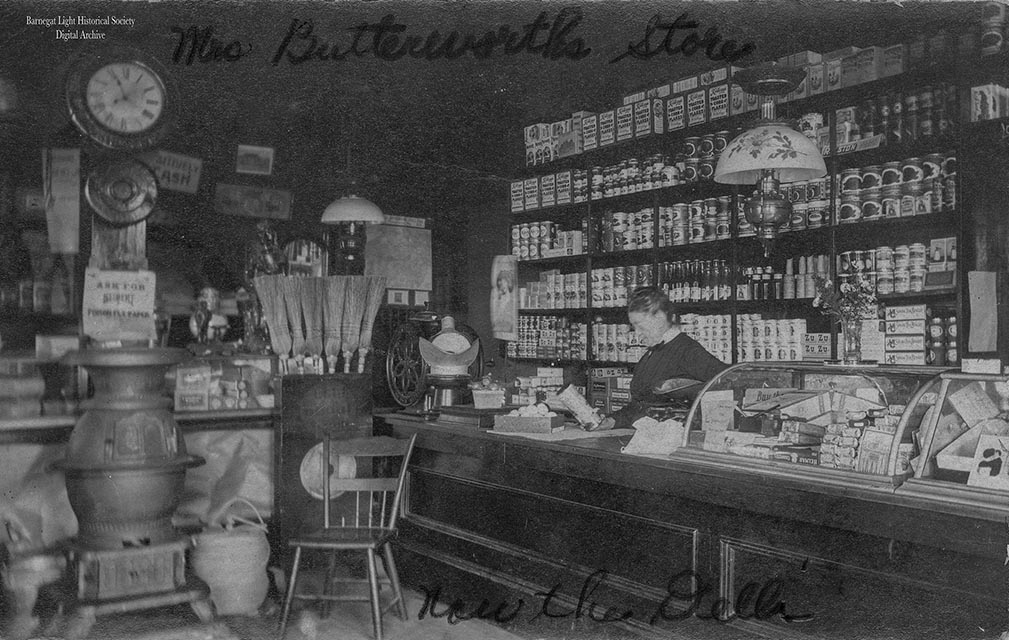
Butterworth was a Gibson Girl who found herself in a place that was undeniably rural. After her husband Lloyd suffered a paralyzing stroke, she took over a general store and managed the post office in Barnegat Light, NJ from 1887 to 1918.
Read: Oliner offers more detailed information on Ellen Low and Lucretia Butterworth
Every Stitch Tells a Story
Oliner’s new project called the Lost Women Series documents the journey a needle and thread takes to bring history back to life one stitch at a time. Currently she is researching Hannah Bacon, the widow of the notorious Captain John Bacon who was responsible for the massacre on Long Beach Island, NJ.
“Bacon was resilient too,” Oliner said. “She managed to rebuild her life despite being married to that guy. It was basically a civil war around here back then.”
Oliner began her career as a seamstress at the tender age of 12 when she taught herself to sew her own clothes.
“Out of necessity,” she said. “I was 6 feet 2 inches tall when I was 12. There was really nothing I could buy to wear so I had to make clothes myself.”
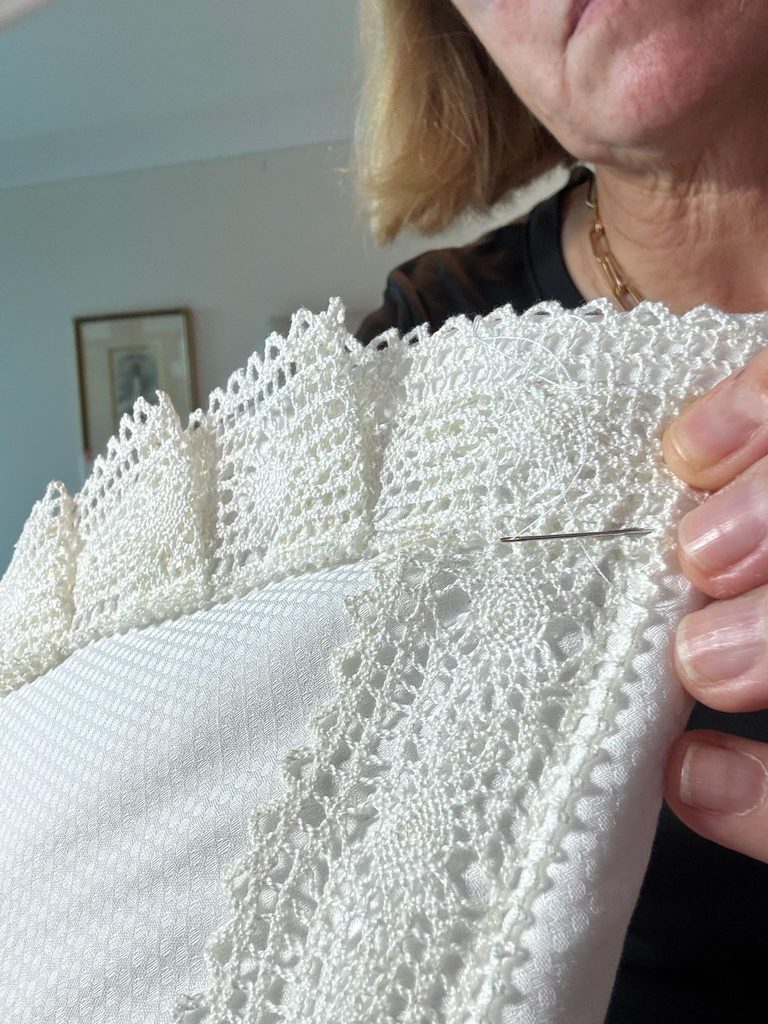
Today Oliner works from her bay front studio in Loveladies, NJ researching and recreating by hand, historically accurate costumes. Every stitch she takes tells a story that is based on exhaustive research and detective work.
“I got started doing historical costuming when I got bored with everyday sewing, “she said. “I’m an historian at heart. I love it. “
When you look closely at a woman’s garment, you’ll find a rich source of information about who she is. In the late 1800s and early 1900s women’s clothes were often designed to accommodate the jobs they performed.
“There’s written history, oral history and then there’s visual history,” Oliner said. “For me, sewing is visual history. You experience the past when you see it and don’t have time to read about it. A historically recreated costume reflects how a person moved around and navigated life. My garments are tied to the professions of these women.”
Haute Couture History
Oliner’s creative process for her handsewn history begins first with a search for the person she wants to design a costume for.
She discovered Lucretia Butterworth while doing her research on Ellen Low and was charmed by her elegance and style. “There wasn’t much I could find about Low but there were a lot of pictures and documentation I could draw from about Butterworth,” she said. “The women I am interested in designing for need to have lived in a very interesting period costume wise.”
Once Oliner settles on someone to design for her next step is to dig deeper into who they were.
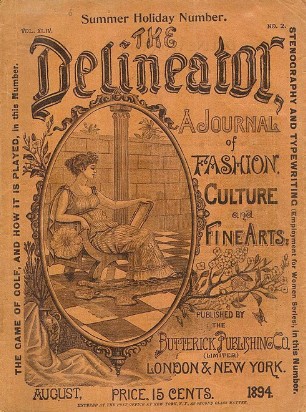
“An important component to recreating an historical costume is to know all about the person who you are designing the costume for,” she said. “As I said there were actual photos and records kept of Lucretia but almost none of Ellen. So, I had to go through historical documents like the Delineator which is like the Vogue magazine of today. Based on those original sources I could come up with an idea similar to something a woman would have worn during that time. I also worked with Past Patterns which is a business dedicated to historical accuracy.
With Ellen I had to imagine what she might have looked like before I drafted her pattern exactly to size. She had to be a little taller since her job required her to reach up and polish the lens and fill the oil lamps. She was a lighthouse keeper, so her outfits had to be scaled back and suitable for a working woman. I pictured her as 5’8”, a basic size medium. Now Lucretia was a city girl, younger, more stylish. For Ellen I walked through the wooded area around the lighthouse, so her colors had to do with the sea and the sand. For Lucretia her colors were red and white for the lighthouse and blue for the sea.”
When all her information has been compiled, Oliner begins drafting her own historically accurate sewing patterns for the gowns.
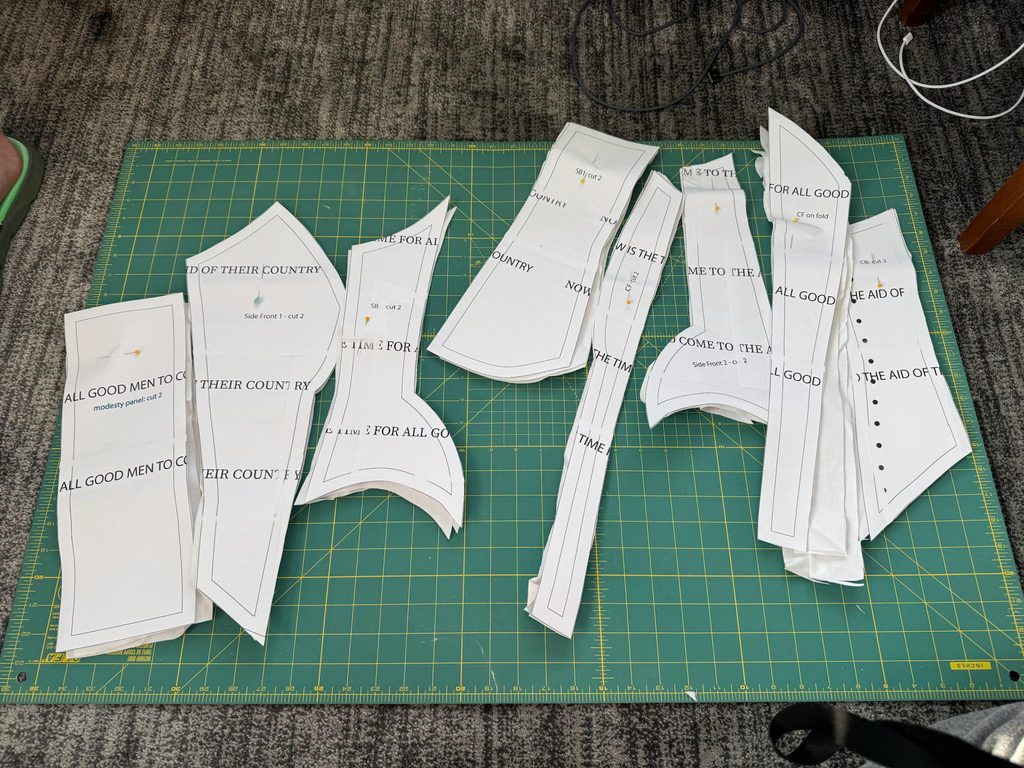
“I had to make my own patterns,” she said. “I’m completely self-taught. I didn’t have access to the extant patterns that go with these costumes.”
Sourcing the perfect historic material to use for the garment is next. Fabric choice, perhaps the most difficult part of recreating a costume is what can make or break an outfit. Oliner said she spends hours scouring the internet for the right material. She has even resorted to snatching a tablecloth from someone’s kitchen table if the look is right.
“Your fabric has to be as historically accurate as possible,” Oliner said. “For the gowns I made for Low and Butterworth the fabric had to be all cotton, washable with a floral or a striped pattern that was historically accurate. I stay away from any synthetics, and I would never substitute polyester for a silk fabric. Everything on Lucretia’s belt for example was lined and edged with silk taffeta. No garbage fabrics.”
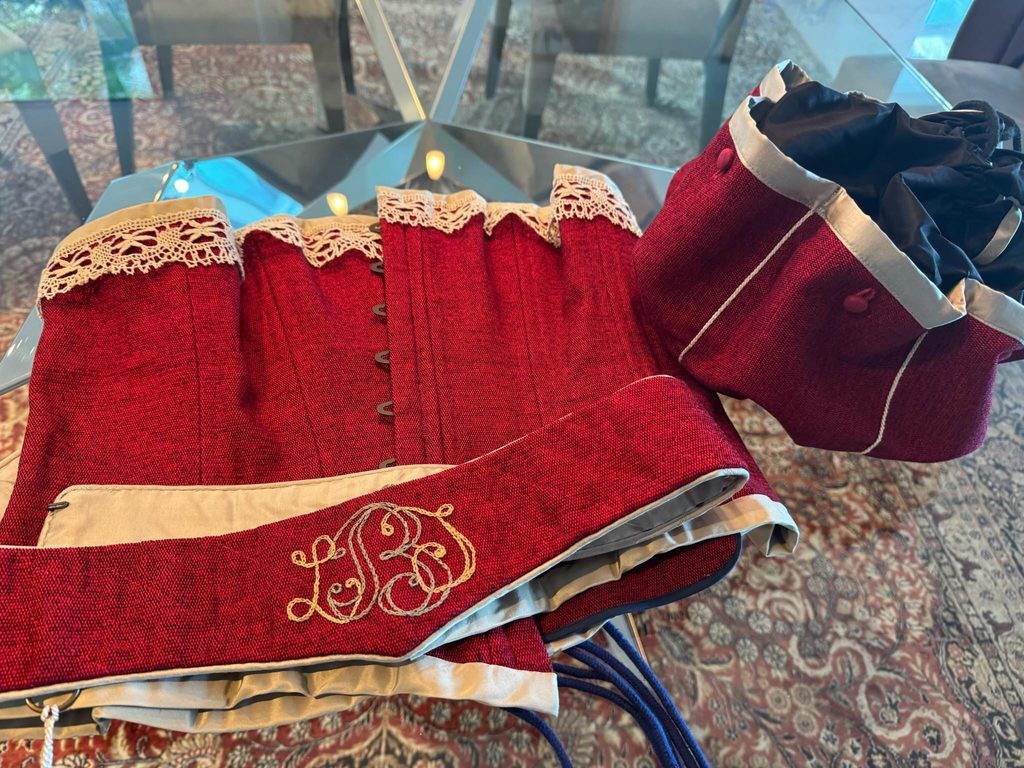
Lucretia’s Red Corset
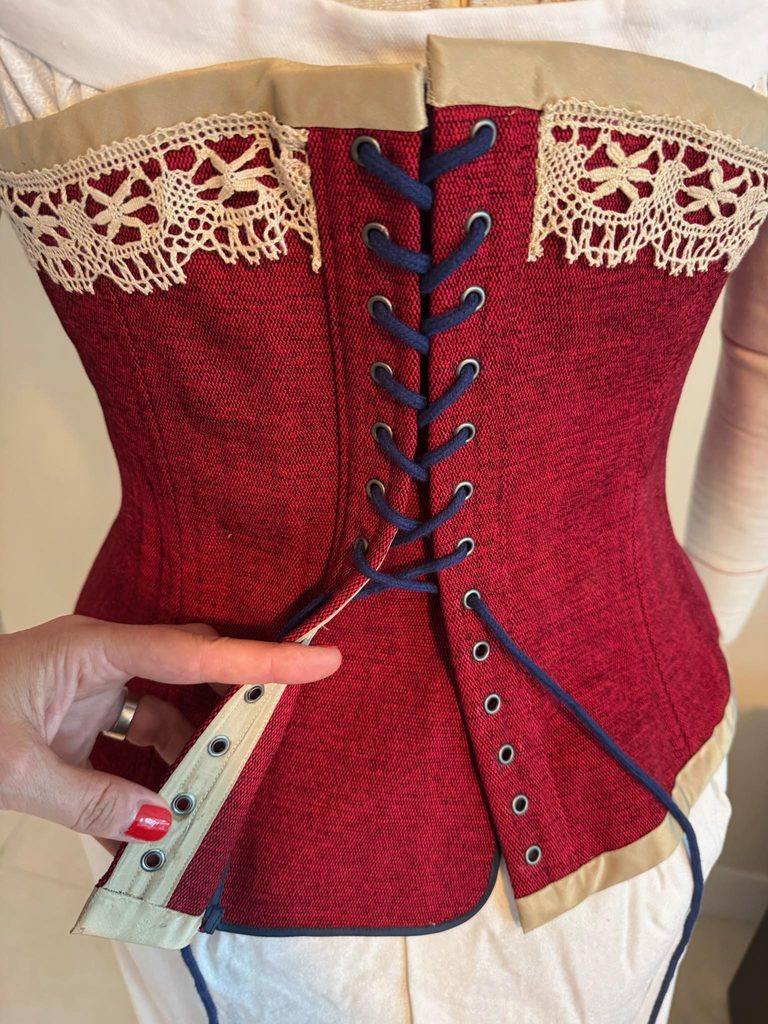
Oliner’s historic gowns are not only linked to the professions of the woman who wore them but to their personalities as well. The same goes for their undergarments which she said speaks to a woman’s character. For Lucretia she crafted a red corset trimmed with silk and hand crocheted vintage lace.
“It’s kind of racy,” she said. “But Lucretia had it going on. Actually, a lot of women wore red corsets in the day.”
Ellen’s undergarments are understandably more sedate.
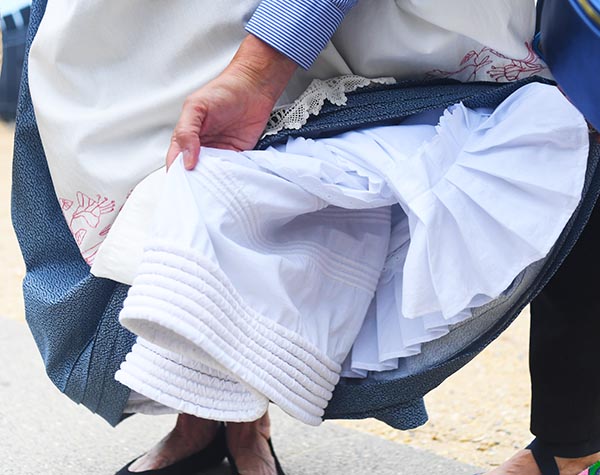
“I included a corded petticoat for her that was accurate to the period,” Oliner said. “The cording kept a woman’s skirt away from her legs which was important for someone like Low who’s climbing steps all the time with big containers of oil for the lighthouse lamps. But a red corset for Ellen Low? She would have said no thank you. 1837 was a time for Queen Victoria so things were more conservative.”
Accessories and the use of embellishments are the final components to Oliner’s outfits which she pays very close attention to. She believes there is a very real human element reflected in a hat, a stick pin, buttons and grommets since they are a key to woman’s character and interests.
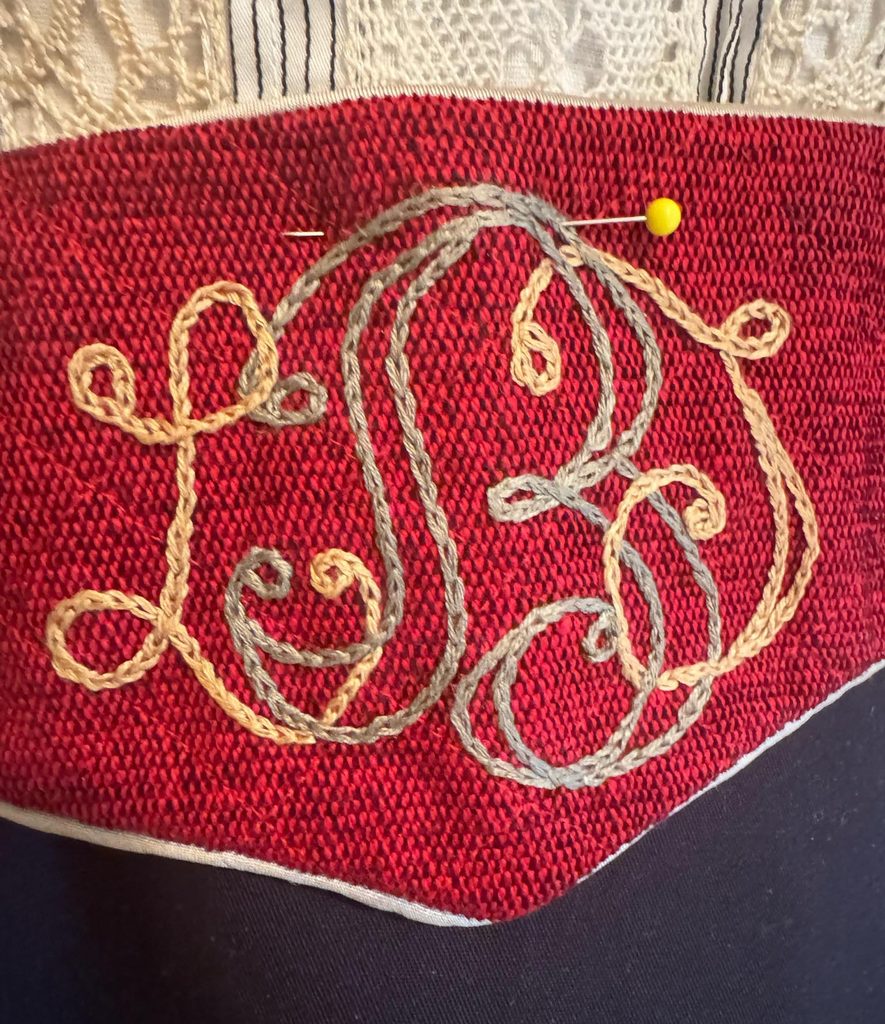
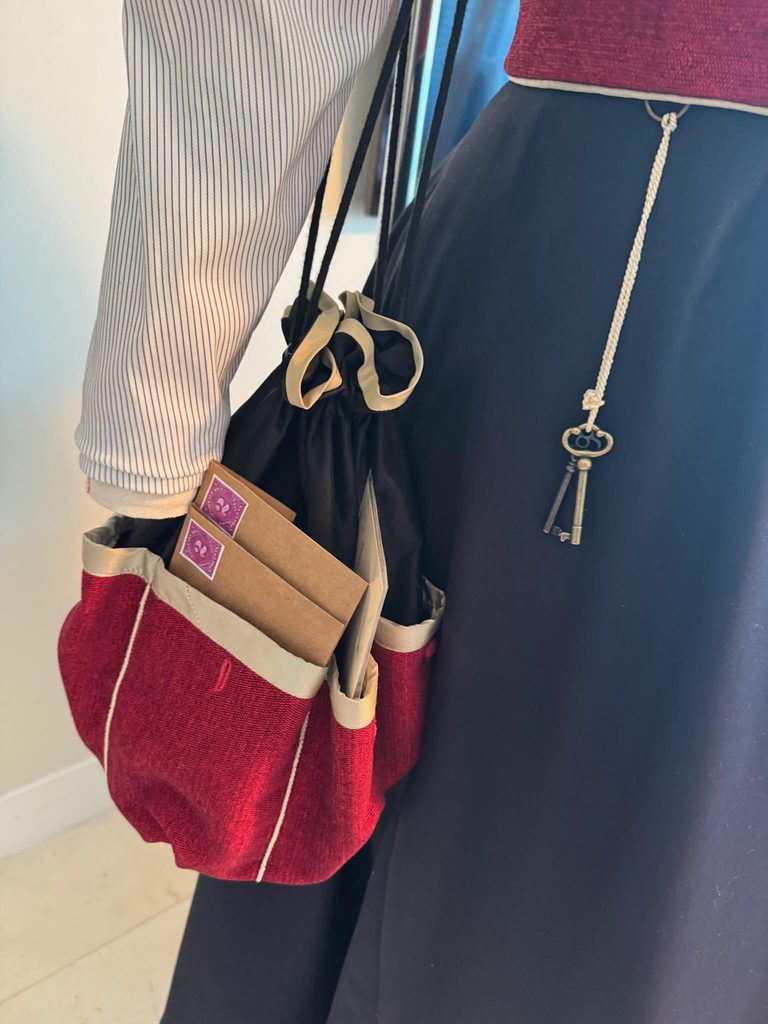
Accessories for Lucretia include a handcrafted silk taffeta work bag which is used as a mail bag. A hand embroidered belt includes a chatelaine hook to allow Lucretia to carry her keys to the post office or the cash box at the general store.
Recreating historical fashions goes beyond nostalgia for Oliner.
“I would say these costumes are asking you to want to get to know more about the woman,” she said. “I use them as tools to tell a story about someone who had concerns about her wardrobe just like everyone else. Ellen Low is wearing an actual cotton apron from the 1890s that I got for $15. But it’s a patched apron and it has pockets for a book by Charles Dickens called Oliver Twist. It was the hot new book for 1837.”
Magic happens for Oliner when she sees her creations on the actors she hires to wear and display them.
“I get a thrill when I see the outfit come off the dress form and onto a real person,” Oliner said. “The costume comes to life, and it takes my breath away. It’s like giving birth.”
Ellen S. Low’s outfit is currently on display at the Barnegat Lighthouse State Park Visitors Center
Lucretia Justice Butterworth’s outfit is now on display at the Barnegat Light Historical Museum
Contact Information
Liz Oliner
li*@************cs.com
Instagram: @liz.oliner
Images supplied by Liz Oliner