
Surfing’s Dirty Little Secret
Surf’s up and so is an appetite for ecofriendly plant-based surf boards. What’s feeding that interest is what some are calling the surfing industry’s dirty little secret.
That secret has to do with surfboards.
Some surfers and members of the industry see surfboards as carbon footprints capable of causing major pollution problems for the planet.
Amelia Martin is one of them. As a surfer and a business entrepreneur she is dissatisfied with the surfing industry and worried how much toxic danger surfboards pose to the environment.
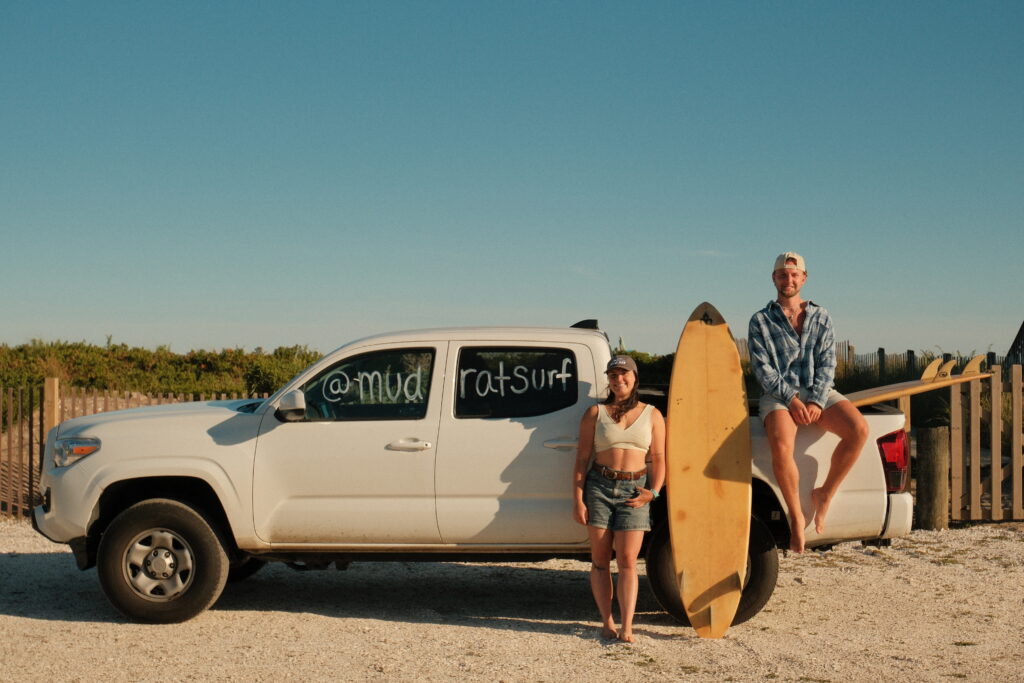
Martin is also CEO of Mud Rat, a Connecticut based company that creates nontoxic, eco-friendly, mushroom surfboard blanks for use in the surfing industry. (Ecofriendly surfboard blanks are made using materials that are certified as sustainable, safe, and chemical free.)
According to 360 Research Reports the surfing industry this year is worth a whopping 273 billion dollars. The total number of surfboards manufactured in 2026, from shortboards to longboards, equals 1.2 million.
Most of those boards have foam and fiberglass cores made from petrochemicals which are later coated with resins like polyester or epoxy creating a coastal cocktail of chemicals.
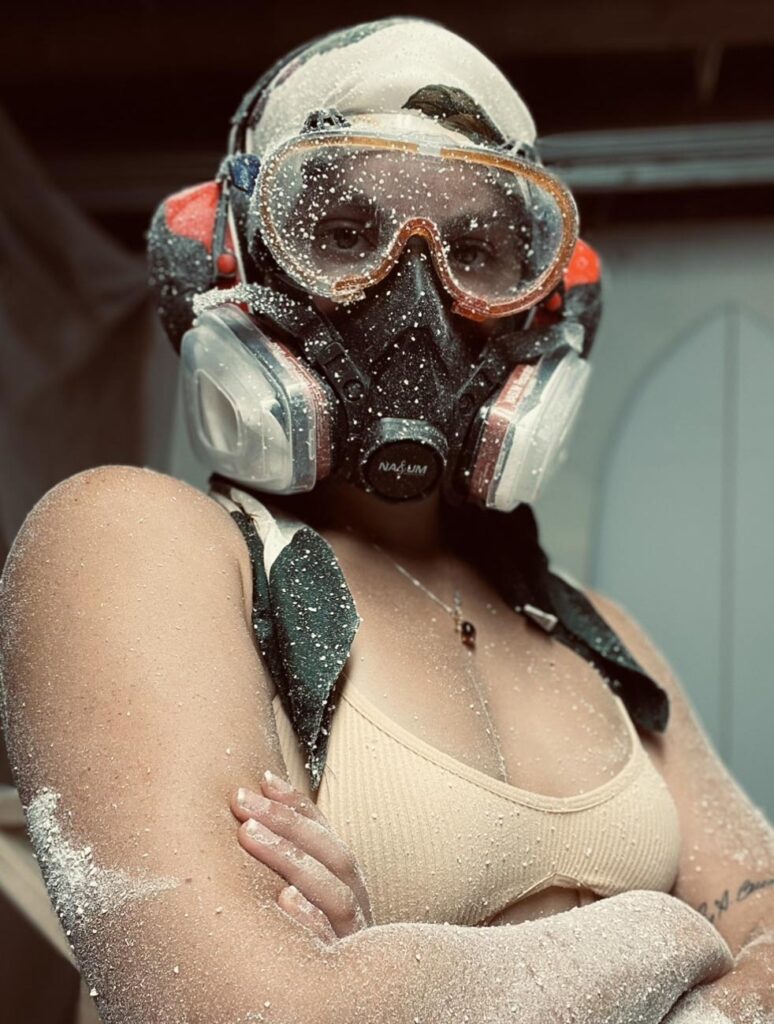
“Surf boards contribute big time to the problem of pollution,” Martin said. “I would say the majority if not all of the surfboards on the market today except for wooden surfboards can be considered toxic plain and simple,” Martin said. “When I first started shaping blanks, I wore the full protective equipment, respirator, long sleeves, bandanna for my hair. I would still get a rash and a cough. The dust is just brutal. It’s so static and light and it will stick to everything and end up in your lungs.”
“Yeah, there’s a lot of talk about surfboards and surfing being one of the most toxic industries. The funniest thing is surfers are the most stubborn, closed minded, biggest hypocrites, me included, when it comes to being environmentally friendly. They preach about how they connect with nature and the waves, but they use petroleum in the boards. Yeah, you can say I said this about surfers. Maybe this will get you some attention.”
– Max Dimon, owner Wave Hog Surf Shop, Ship Bottom, NJ
Martin said surfboards are especially brutal to the environment. “There are more of these bad materials that find their way off the shelves and into the ocean,” she said.
Damaged surfboards often end up in landfills since it’s easier and cheaper to buy new ones rather than repair them. Discarded boards are non-recyclable, non-biodegradable and take centuries to break down. The particles they release contaminate water, marine ecosystems, wildlife and ultimately humans.
“The surfing industry is so tied to having a healthy environment,” Martin said. “So, we say why aren’t you using more sustainable products to clean up the environment? Why are you using things that are the exact opposite of a healthy environment?”
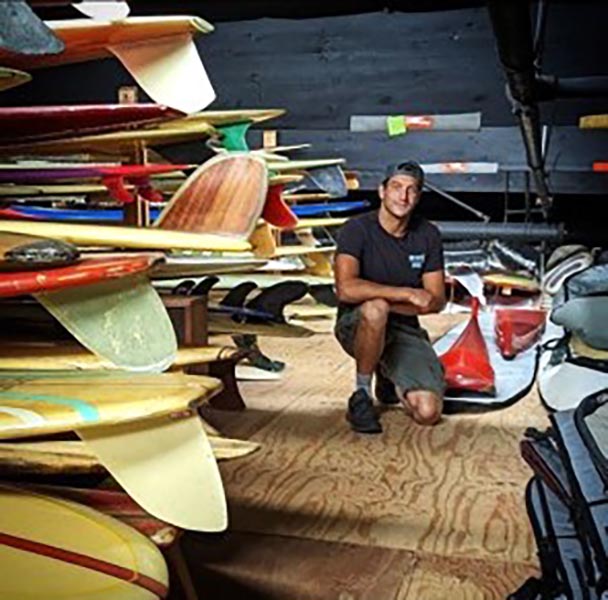
Max Dimon, owner and “Boss Hog” of Wave Hog Surf Shop in Ship Bottom, NJ, a surf shop that has been part of the Long Beach Island, NJ surf community for 21 years agrees with Martin when it comes to talking about toxic surfboards.
“Yeah, there’s a lot of talk about surfboards and surfing being one of the most toxic industries,” Dimon said. “The funniest thing is surfers are the most stubborn, closed minded, biggest hypocrites, me included, when it comes to being environmentally friendly. They preach about how they connect with nature and the waves, but they use petroleum in the boards. Yeah, you can say I said this about surfers. Maybe this will get some attention.”
Martin’s attention to the problem of toxic surfboards first began with an idea to create a blank from recycled ocean trash.
“I did a year’s worth of research into creating recycled garbage surfboard blanks,” she said. “Bad idea. You create air pollution when you melt the plastic to shape into blanks. When the board breaks it would just go back to being trash again. If you’re going to build something you want to build something that’s going to stop the creation of what you were trying to fix.”
To build a better surfboard blank Martin decided to use mushroom mycelium, the vegetative, root-like network of fungus that absorbs nutrients, supports ecosystems and can form mushrooms under the right conditions.
“It was really the only material we could work with in terms of cost and the least hazardous,” she said. “Right now, we are making our surfboard blanks out of mushroom mycelium. Eventually we want to get into kelp, sargassum or seaweed, algae and other plant-based sources as well.”
Martin said the recipe for making the material for her mushroom stuffed blanks is not a complicated one.
“You start with your mushroom species or spores,” Martin said. “You combine it with whatever organic substrate you prefer to use that the mushroom also likes to eat like damp hardwood sawdust, hay, or hemp. Mushrooms can basically decompose anything or grow on anything so with mushrooms the world is your oyster.
Then you put that mixture into whatever molds you are using, place them into a dark environment, anything that can maintain a consistent warm temperature. You leave it there for about seven days to let it grow. After that you bake it in a dehydrator to suck the moisture out of your product and kill the mushroom spores to prevent it from going any further.”
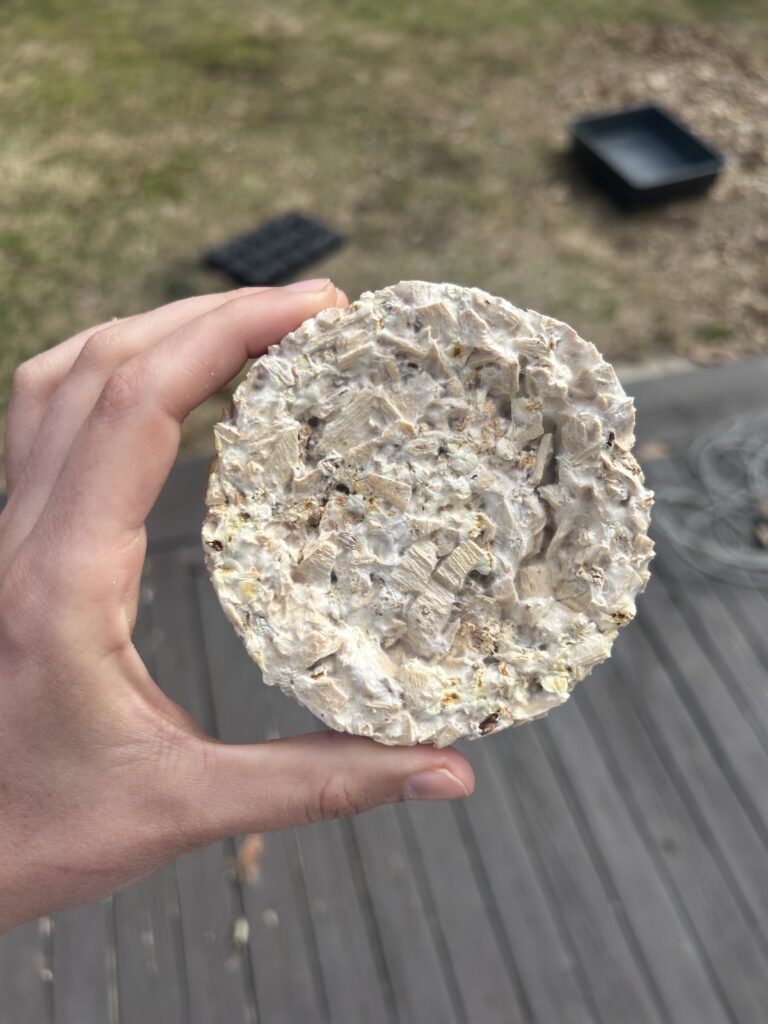
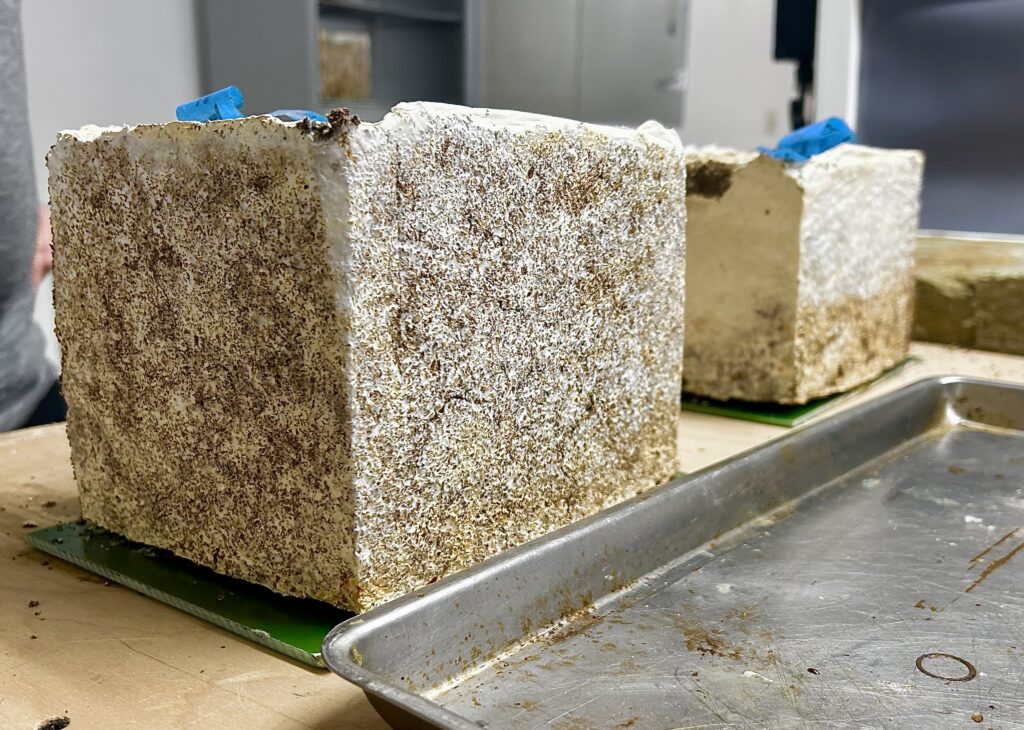
The mushroom bricks are then ready to be shaped into blanks. “When shaping there is dust but it’s nontoxic,” said Martin. “The particles are heavier than Styrofoam, so they fall to the ground rather than floating in the air so it’s more like you are working in a woodwork shop.”
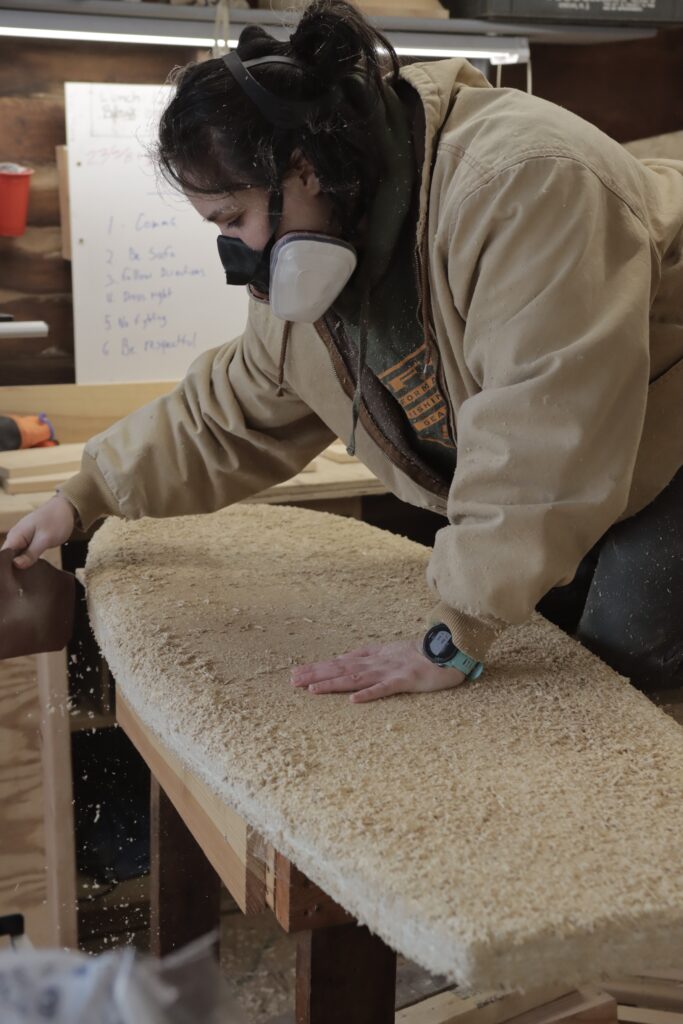
Martin is a board shaper and wants people to know Mud Rat isn’t a custom board shop.
“We are only making blanks,” she said. “But you can still buy a board from your favorite shaper who uses our blanks. Our goal is to get ecofriendly blanks in the hands of shapers and become a viable, non-toxic option for them. If there are solutions that are non-toxic, but the form is just as good as what is currently on the market, there’s no reason to keep using chemicals.”
As an entrepreneur Martin hopes her mushroom revolution will ultimately revolutionize the surfing industry.
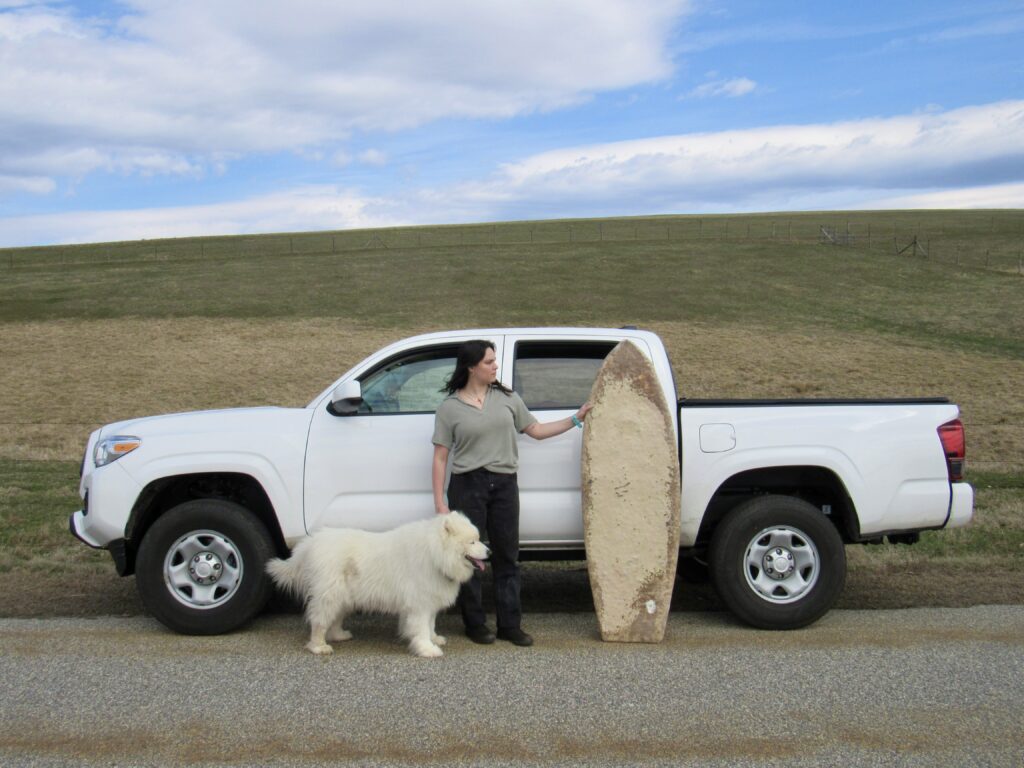
“Yeah definitely,” she said. “This is 100% of what we want for the future of Mud Rat. As surfers we have so much responsibility to maintain the environment. Now more than ever it’s important that we continue to look for sustainable solutions. A lot of people in this industry are very open and excited about working with new materials. The only thing you need to make sure is that what you are doing will need to be better than what is out there already. Performance is very important.”
Dimon said he is excited to see if someone can produce an environmentally safe affordable product. He isn’t sure, however, whether ecofriendly surf boards will change the surfing industry.
“I’m not saying hers is going to work,” he said. “I’m not saying it won’t. We’re at a point now where we’re trying new things and I think that is what is going to make a difference in the surfing industry. But her process has been a journey which is as human as it can get. And that is what is going to keep this industry going.”

Contact Information
Mud Rat
Amelia Martin, CEO
Email: mu********@***il.com
Instagram: @mudratsurf
Wave Hog Surf Shop
Max Dimon
620 Long Beach Blvd. Ship Bottom, NJ 08008
609-494-1040
Email: in**********@***il.com
Instagram: @wavehogsurfshop
Images supplied by Amelia Martin and Max Dimon