
Sticks, Stoked and the Surf Crazed ’60s on LBI
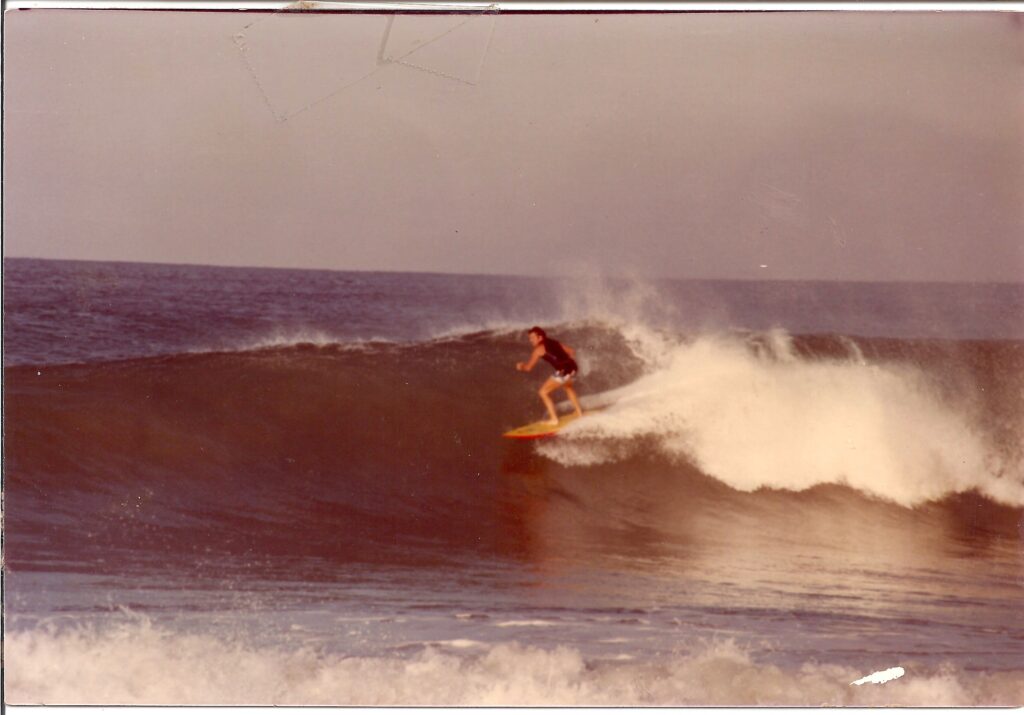
Independent filmmaker David Kaltenbach’s feature documentary Addicted to Surf explores the 1960s surf craze on LBI. His movie looks at the characters, surf boards and cultural shifts that have fueled one of the most important eras in surf history.
Coastal Living LBI sat down with Kaltenbach to talk about how his adventures as a surfer, and his documentary film Addicted to Surf captures the spirit of a generation riding the waves of change.
(Thursday, July 9th, 2026, at 8:30 pm there will be a screening of Addicted to Surf open to the public at The Marlin Restaurant & Bar in Beach Haven, NJ)
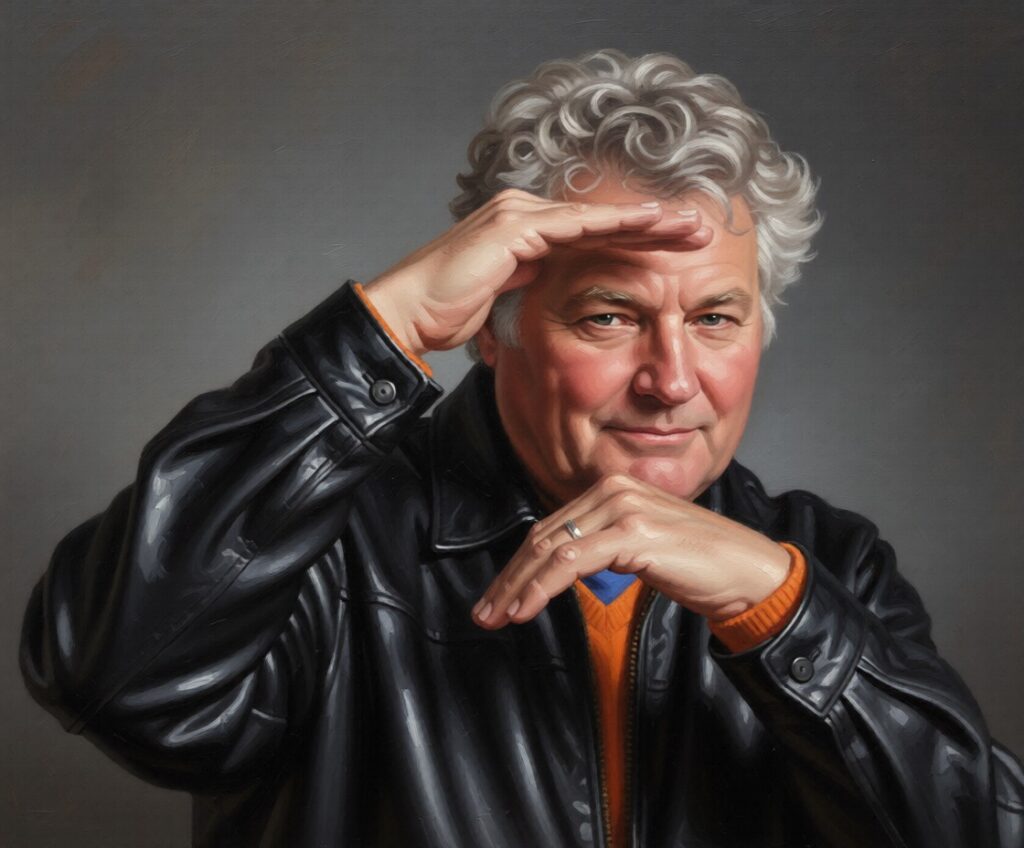
Let’s talk a little about your background as a filmmaker.
I went to NYU Film School where they offered a Certificate of Directing in Film. I also went to Weiss Barron Acting School. Not to become an actor but to become a better director.
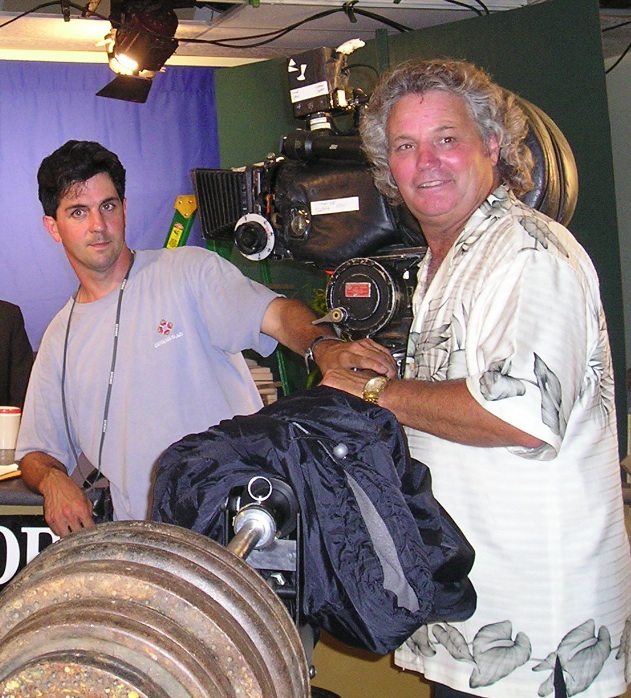
In 1988 I bought my first camera, an 8mm Sony after a surf trip to Costa Rica. It’s when I first fell in love with my camera. During my ’90s surf trips to Central America, the Caribbean, Hawaii and Mexico I brought my camera and my surfboard. In the early 90s I did a TV show on Long Beach Island called LBI Live for four years. And that was like press and play and record. Since I began filming, I’ve gone through at least six or seven formats, 8mm high definition digital, dv cam, all kinds of formats you shoot in.
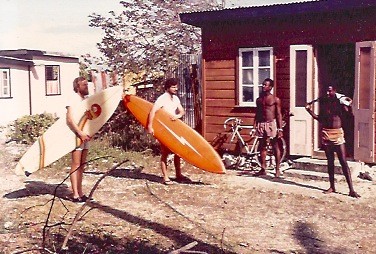
Tell us about your first foray into making movies?
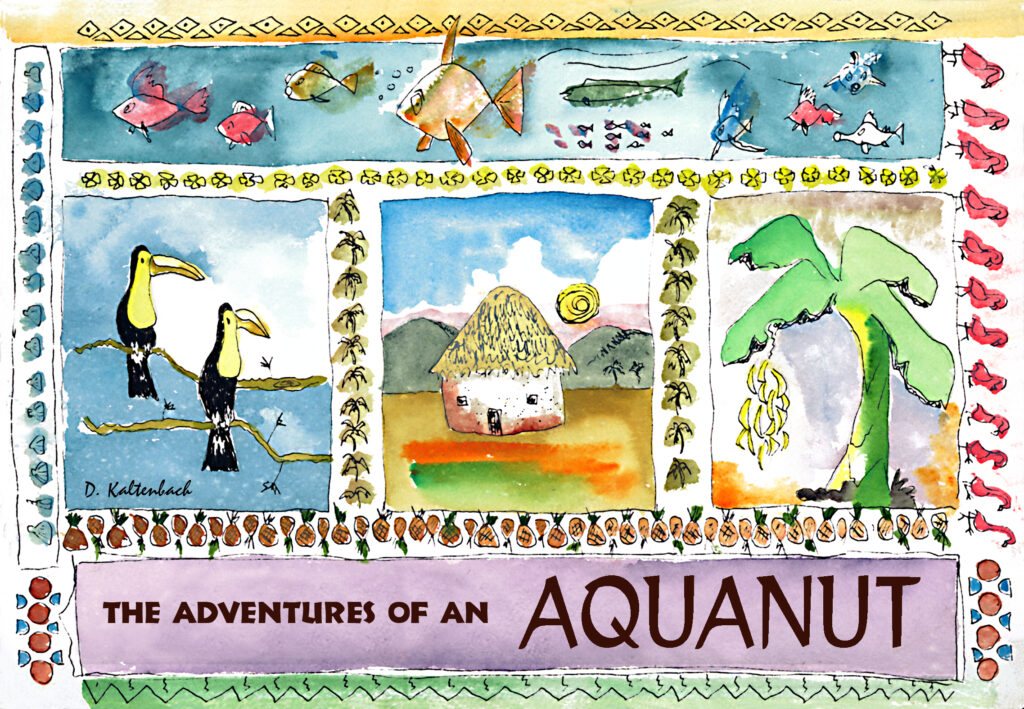
I created this thing called the Adventures of an Aquanut. I carried my surfboard to NYC and walked around asking people, ‘Which way to LBI?’ One guy said to me, ‘Oh it’s on the other side of the bridge’. The next scene in the movie I’m walking down the street to Hoboken with my surfboard, singing ‘Long Beach Island, Long Beach Island Here I Come’ to the tune of ‘Kansas City, Kansas City Here I Come’. The scene after that I’m dancing in the Pine Barrens. That was the first thing that got me into filming. After that I made an hour-long video called Eye of the Artist. It was all about surfing in Barbados and the local culture. That’s where I got my expertise in building a story.
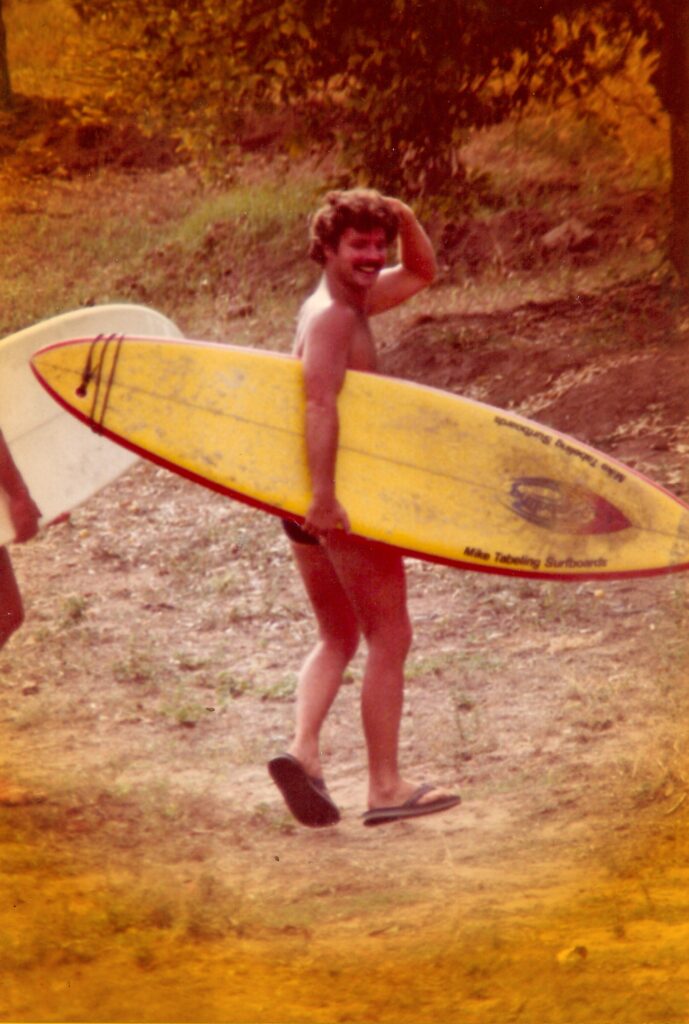
What was the first documentary you produced?
My undergraduate degree is in Marine Biology. My first documentary in 2008 was called Fish for Tomorrow. It has to do with promoting sustainable fisheries and responsible fishing and it was produced in cooperation with Viking Village in Barnegat Light. NJ.
How did you first get the idea for your documentary, Addicted to Surf?
One of my surf buddies, we go back to when we were 14 years old, has kids and he asked me to piece together a surfing mini documentary for them. He gave me a list of about twenty people to interview. And while I was listening to these guys, I thought this is a wealth of information! Somebody must do something with this.
What’s the story behind Addicted to Surf and who are you looking to reach?
Well, the surfing community for sure. But it’s a film for everyone, all ages. It’s historical. It’s for people from 60 to 80 who experienced the complete joy of the island in the 60s, the surfing, the unbelievable music. It was just an electric time on LBI back then. This movie is a vehicle to try and get you back to the 60s and while I can’t capture it completely, I can go back and say this is what we were riding.
How much time has it taken for you to complete Addicted to Surf?
Full time let’s say three years. I’m using and incorporating all my footage from the nineties and the 2000s. The film is an historical surfing documentary about what it was like to grow up on Long Beach Island, NJ during the late 60s, surfing and witnessing the transformation of the long board to the short board. I call it evolution, the revolution of the short board and how it changed surfing forever. I witnessed this. I was a part of it.
To make Addicted to Surf a true historical surfing documentary what elements did you use?
I used interviews, firsthand accounts, archival photos, insights into board designs and my own footage. My adventures from all over the world as a surfer. There’s a lot going on. I also incorporated the music of guys I filmed for the past fifteen years that were young in the late 60s and 70s. Vinnie Martell, who started the group Vanilla Fudge and other artists that I have dealt with. I got approval from them to use the images I have of them doing jam sessions and I combined the jam sessions with surfing footage.
Musically speaking, do you think surfing has a sound?
Absolutely! But surfing doesn’t have just one sound. It’s a conglomeration of different sounds. Sure, back in the 60s surfing music was the Beach Boys. I spent winters in Barbados in a surf shack and walking from my shack to the beach you would hear reggae music, Bob Marley. That music would permeate through your bones. So, when I think about Barbados and my surfing life down there, I think about listening to reggae, UB 40, an English reggae band.
Aside from history, what makes Addicted to Surf such an important documentary?
When I showed the film to all my buddies, they said Dave, nobody has done a movie that’s documented the evolution of the long board to the revolution of the short board. I bought a 9’4 dinged nose rider long board in 1966 in eighth grade for $200. I was so proud of it. And then I came down here next summer and suddenly, the boards dropped two feet! I said to my old man I got to get a new board, and he said go get a job. So, I sold the long board. Three months ago, I bumped into a buddy who sold the same board I bought for $200 for $8,000! He held onto that board for fifty years, but he made money on it.
Growing up on Long Beach Island, was there any one event you remember that got you into surfing?
July 1966. Bruce Brown came out with the Endless Summer. It wasn’t shown in theaters. Guys down here were showing it at fire halls. I saw it twice and that put the bug in me and in a lot of people. As kids on LBI we were addicted to surfing. I spent all my summers down here since I was in fifth grade. I gave up all my sports – baseball, soccer – so I could surf.
How do you feel about surfing on LBI today?
The thing with LBI, and this is real, is that there’s this thing called the beach break. Beach break is not easy to surf. But I always say if you can surf LBI on a hurricane or nor’easter swell that’ s six to eight-to-ten-foot waves you can surf anywhere in the world.
Do you have to be a good interviewer to make a good documentary film?
Well, you must have the guts to be an interviewer. I’m a good interviewer because I fear nobody with my camera.
Share your thoughts on what a good movie needs to have.
A good beat and no death valleys. Now a days the seconds that people will watch when nothing happens in a film are out the window. Their attention span is not long. What keeps people’s attention with Addicted to Surf is you don’t know what’s going to happen next. I also use my music to make the transition from one scene to another, from long board to short board.
Did you encounter any surprises when you were making your documentary?
No. Well, maybe. Just looking back at the adventures that I had and the risks that I took. I mean I had to quit my real job to go surfing. Mostly all my friends who were serious about surfing were all self-employed. Back then you couldn’t be a surfer and punch a clock from eight to five. And go away in January to surf for two, three months.
Technology has influenced the making of movies. How do you feel when you see people shooting movies with a camera phone?
After going to NYU and learning all the steps to filming and then shooting a full-length movie film? Uh, I just can’t get over it. There’s no longer that beautiful texture of film, I don’t care how many filters you put on an iPhone movie.
Has AI changed the game for documentary filmmakers?
Well, they say it’s a concern. It hasn’t changed mine.
Is there anyone you credit as your inspiration?
Not really. I’ve never been a hero monger. Being an artist I’ve always had to be original, creative and compelling. So, I never wanted to duplicate anybody. I tell my story with a blank frame in the same way an artist approaches a blank canvas.
Do you see a difference between making a movie and distributing it?
It’s like night and day. You can’t just be an artist. Marketing is the expensive part of making a movie. You must also be a shrewd businessman.
The next time you open a fortune cookie what do you hope it’s going to say?
Your movie has been bought!!! For an independent filmmaker those are the words you want to hear.
Images supplied by David Kaltenbach
Contact Information
David Kaltenbach
Kaltenbach Productions
Email: da***@*******************ns.com
Instagram: @kaltpro