
Shuck It. Let’s Farm Oysters.
It’s good to love what you do to make a living.
And if the way you make your living allows you to pursue a passion for producing top quality oysters that’s even better.
Which is exactly what independent oyster farmers Ryan and Julia Schramm have been doing since 2019. As a husband-and-wife team, they own and operate Schramm’s Shellfish Oyster Company on Long Beach Island, NJ.
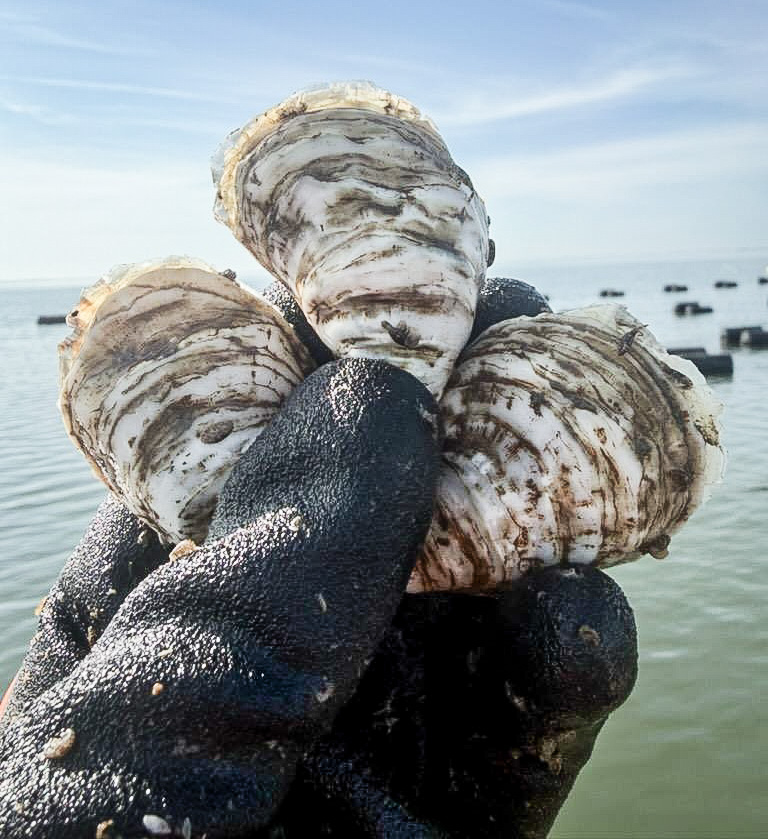
The Schramm’s work hard every day keeping Barnegat Bay a beautiful environment while harvesting over 200,000 oysters annually.
“Last year was about 200,000. This year, hopefully more,” Ryan Schramm said. “We are a very small farm. Tuckers Island, maybe a mile away from us, they do about a million a year. The difference is they have been raising oysters 10 years longer than us.”
Currently off the coast of NJ there are 42 oyster farms.
Scott Lennox, co-founder of Barnegat Oyster Collective, said right now isn’t an easy time for oyster farmers in NJ.
“It’s a difficult time,” he said. “You’re subject to the weather, the elements while you’re out there doing your work, governmental pressures. We’ve just finished with the worst winter that the modern farming industry has ever experienced. Some farms lost much, if not all their gear.”
Yet despite the pressures from Mother Nature and the government, Lennox said there are two reasons why it’s also a great time to farm oysters.
“First, people have found a way to make it a successful business and navigate the highly regulated industry,” he said. “The skills of the oyster farmers have never been better, everybody is learning from each other, which seed sources work better, the methods that work better, the genetics of the oysters that work in these conditions.”
The second reason Lennox said has to do with the demand for oysters.
“Locally and out of the area, it’s never been better,” said Lennox. “The ebbs and flows of the marketplace, it’s a great time if you’re thinking from a commercial standpoint,” he said.
And if you’re thinking from a commercial standpoint, it’s hard to ignore the growing desire people have had, for the past decade, for locally sourced, good seafood.
“For sure people want to know where their food comes from,” said Julia Schramm. “So many people want to eat our Violet Sky oysters because they are local. When you look around this area it’s a beautiful place to get your food from and oysters are super shockingly healthy for you.”
“Oysters are the most nutrient dense sustainable source of protein, said Ryan Schramm,” Better than a steak.”
Good for you, yes. But oysters are also good for the environment.
Before an oyster reaches its final resting place on a raw bar it’s been busy filtering between fifty to sixty gallons of water a day to remove pollutants from the waters.
“What I really like is the fact that everything we do out there helps clean the bay,” said Julia Schramm. “We’re a net positive for the environment. Everything commercially grown is a detriment to the environment. Look at cattle farms. Even soy farms. They strip the ground of nutrients. Oysters have zero carbon footprints.”
Both Ryan and Julia Schramm didn’t start out wanting to be oyster farmers.
“We were not oyster farmers originally,” said Ryan Schramm. “We both had jobs here on the island. I was a painter getting ready to take over a company and Julia was and still is working for SwellColors Glass Studio in Surf City.”
It was a movie called The Oyster Farmers that got Ryan Schramm thinking about the possibility of becoming an oyster farmer.
“We went over one Friday night and watched a movie at Jetty and I said you know what, I think it would be pretty cool to farm oysters,” he said. “Originally Julia had no interest or plans to join or be involved really. But she got excited about the idea when she saw how much better it could be for the environment.
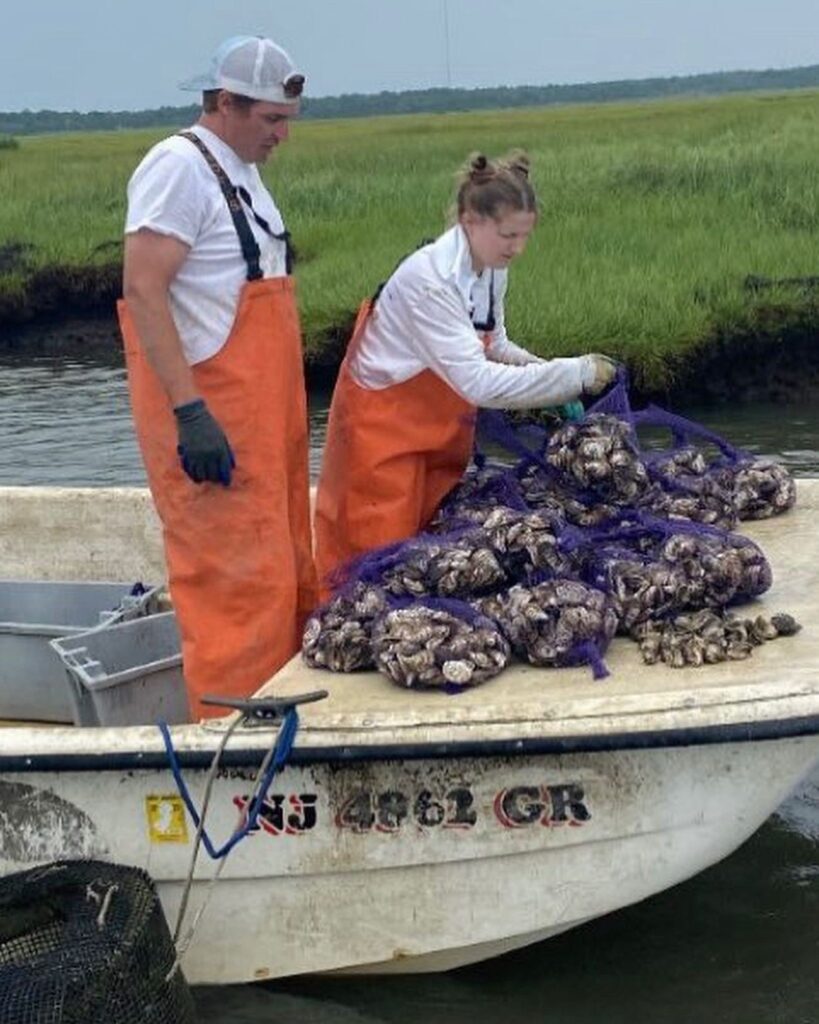
The first thing the Schramm’s did was apply for a lease for a tract from the state agency. They received a two-year lease in Tuckerton Beach, NJ
“You really don’t get to choose where you go,” said Ryan. ” But it turned out to be a great lease because there’s tons of wave action so our oysters get tossed and tumbled a lot, so we don’t have to do it.”
Plenty of Challenges Ahead
The process of farming oysters begins with oyster seeds or baby oysters. The Schramm’s purchase theirs from different nurseries in the area.
Oyster seeds are usually one of the biggest expenditures an oyster farmer faces yet it’s also one of the biggest areas for loss.
“Oh yes,” said Ryan. “You start out with more seeds than you get oysters. If you get 75% of what you started out with, you’re doing well. There’s a lot of loss.”
It can take about three years for a full-grown oyster to develop from a seed. Between that time too many things can go wrong that prevent an oyster from becoming market sized.
“You can lose them to predators, said Julia Schramm.” Crabs. Oyster drills, they look like a snail, and they actually drill a hole through the hinge of the oyster shell. The shell just breaks and the oyster can’t be shucked.”
Ryan Schramm said cold water is another thing on the list for what could go wrong, “If the water is very cold you find a lot of death, he said. “Right now, we’re waiting for the water to warm. Above 55 degrees is optimum to get warm and for the oysters to grow. Below that temp they hibernate.”
Both Schramms admit there are times when they look at each other and ask themselves why they are doing what they do.
“There are good days but there are some that are really challenges,” said Ryan Schramm. “The highs are very high, but the lows are … very low.”
“Your caging will rip in half, or the doors will rip off your cages,” said Julia Schramm. “All the bags of oysters will fall out and end up smashed on top of each other. It’s heart break especially if you have been taking care of your oysters. Your livelihood is gone.”
“In October there was that nor’easter and our gear ended up washing four miles away from our farm,” said Ryan Schramm. “Gone, just gone. That’s when we start looking at the help wanted ads.”
What keeps the Schramm’s from throwing in the towel is their love for oysters in general and for one oyster in particular. That oyster is a beautiful creation known as Violet Sky.
“What I really like is the fact that everything we do out there helps clean the bay. We’re a net positive for the environment. Everything commercially grown is a detriment to the environment. Look at cattle farms. Even soy farms. They strip the ground of nutrients. Oysters have zero carbon footprints.”
-Julia Schramm
Violet Sky cocktail oysters are known for a deep cup and plump meat to shell ratio. The name came about when someone suggested it to them.
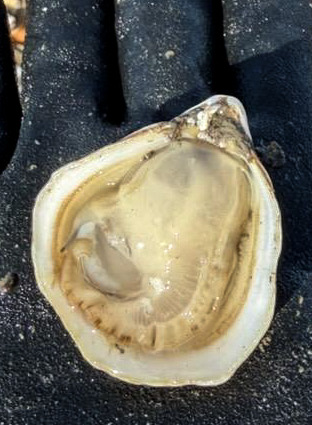
“It sounded romantic,” said Ryan Schramm.
Their love for each other and the work they do is also what keeps the Schramm’s farming oysters. “We were high school sweethearts,” said Ryan Schramm. “We’ve been together twenty years now. “
Both Ryan and Julia say they like spending time together. They also agree that two backs and two sets of hands help make the hard work easier.
“Yeah definitely,” said Julia Schramm. “We love spending time together. And it’s also nice to have the same schedules. We don’t work different days or different times.”
As for ten years from now will Ryan and Julia still say ‘I do’ to oyster farming?
“Oh yeah,” they both said. “We’re in it for the long haul!”
Images Supplied by Ryan Schramm
Contact Information
Barnegat Oyster Collective
Interested in serving up a pan of cheese, butter and herb topped grilled oysters? Head on over here for Ryan and Julia Schramms’ recipe for Miso Herbed Baked Oysters