
Niche News Isn’t New
Niche news has been around for a while. Today we have podcasts, Instagram. email newsletters, blogs, and the like. Yesterday it was small-town newspapers that delivered information designed to resonate with a specific audience.
Back in the 50s, a little summer weekly newspaper on Long Beach Island, NJ called The Beachcomber was one of them.
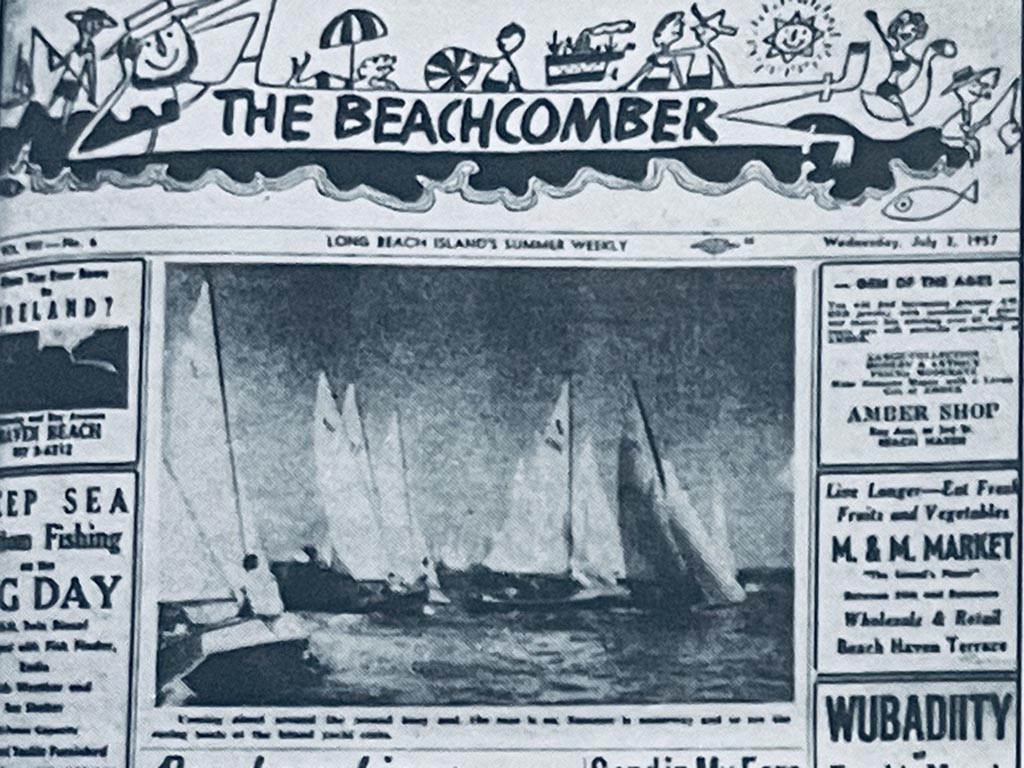
The Beachcomber started in 1950. In 1955 Margaret Buchholz took over as publisher and editor. She ran it for thirty-two years, fifteen weeks a summer season and delivered stories to an audience of vacationing visitors and island locals hungry for news that was relevant to their lives on Long Beach Island, NJ.
“Our content was for an audience along the beach,” said Buchholz. “Back then The Beachcomber was a local newspaper for an island audience which in the summer greatly varied and went from Memorial Day to Labor Day.”
Since niche news delivers specialized content to a small, targeted audience, a publication will often develop deep roots in the community it serves.
The Beachcomber understood this. Regular weekly columns that focused on local events, businesses, and the people who lived, worked and relaxed on the island during the summer months helped the paper build a loyal engaged audience.
“The focus of The Beachcomber was the Arts Foundation and the Surflight Theater,” Buchholz said. “We had columns for fishing, boating, and food recipes. We even had a social or gossip column. A woman whose husband ran the Baldwin Hotel would do little bits about who was down for the weekend, why they were important, and where they were from. Well known people who would come down for the summer would also get interviewed.”
Unique Story Telling Opportunities for Writers
The Beachcomber also had news, good news, for its writers who wrote for the publication.
Because the paper printed articles that appealed to a small audience with specific interests in mind writers became independent creators. They were given flexibility and the rare chance to choose topics that aligned with their own interests.
“Mostly each writer came up with their own story,” Buchholz said. “If something was going on it was a story. In the beginning we had writers doing their own columns. But as we started getting more advertising, we needed more writing and that’s when we started using their fiction. One of my best writers was Ed Brown who was an English teacher at Southern Regional High School. He wrote a column every week tied to local things. The mayor of Surf City called him a communist.”
Editors of small niche publications recognize that some of their writers will eventually move on to bigger publications and new career challenges. Buchholz saw this happen with several of her writers, but she took it in stride. She was even proud to see them leave for other publications.
“Writers for me went on to bigger and better things but they considered The Beachcomber as a good start,” Buchholz said. “I had this one woman and she and her brother worked for me for several years. She went on to work for Vogue magazine. In the 80s a woman working for me ended up working for the New York Times for twenty years. We keep in touch from time to time.”
The Yin and Yang of Journalism
It’s not an accident that today’s traditional publications and niche news outlets are often considered the yin and yang of journalism.
Traditional journalism coverage is mainstream and broad based. Niche news focuses on a small audience with specific interests. (Although they can coexist as in the case of NJ.com that collaborates with local news services.)
What it all boils down to is the fact that what one news platform can deliver the other often can’t. Back in the 50s Buchholz, as the editor of The Beachcomber understood this and tailored her news coverage accordingly.
“We weren’t considered traditional journalism,” Buchholz said. “Traditional journalism covers the news. Local newspapers like the Beach Haven Times and the Tuckerton Beacon they covered the news of their areas. But what they couldn’t do we could. Initially we were more entertainment, feature stories. I even ran fiction. We stayed separate.”
Today niche news is mostly online. Its delivery differs greatly from yesterday’s traditional local island newspapers like The Beachcomber in the 50s.
The concept of niche news, however, yesterday and today, still remains the same. Coverage is local and specialized. The connections readers form with this coverage results in an audience that is loyal and long lasting.
“I agree with you about the niche journalism of course,” Buchholz said. “Back then our content and our audience was along the beach, and we were a local island newspaper people looked forward to reading every summer for 32 years.”
Learn more about LBI’s first female publisher and editor Margaret Buchholz here.
Image courtesy of Margaret Buchholz