
Love at First Sight
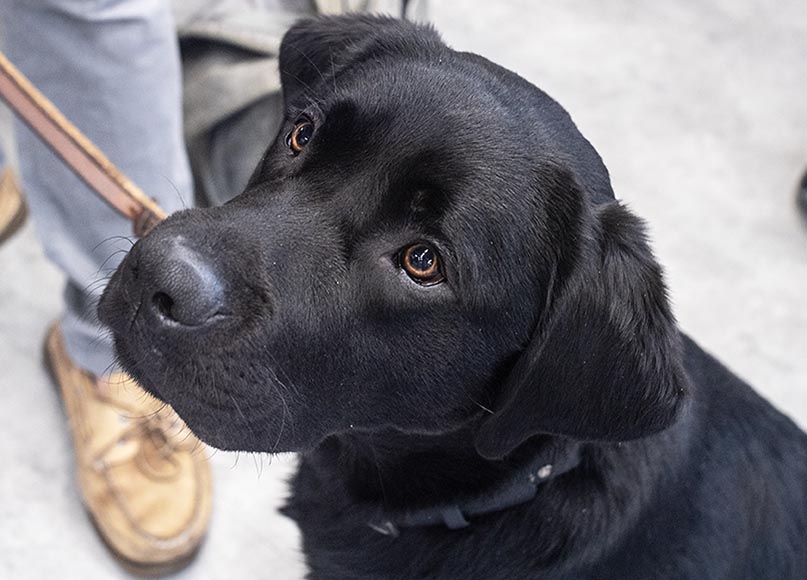
For Michael Moran, who has been congenitally blind since birth, it was love at first sight the day he was introduced to his guide dog Mia at The Seeing Eye, the world’s oldest guide dog school located in Morristown, NJ.
“When I met her, I fell instantly in love,” Moran said. “It was love at first sight! She was so sweet. I couldn’t help it.”
The word sight of course depends on how you define it. For Moran sight meant the instant bond both he and Mia felt for each other when they first met three years ago. Since then that bond has deepened and developed into a relationship based entirely on trust.
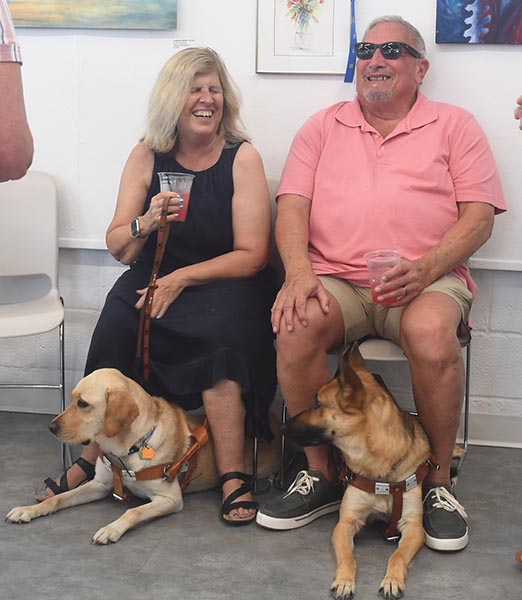
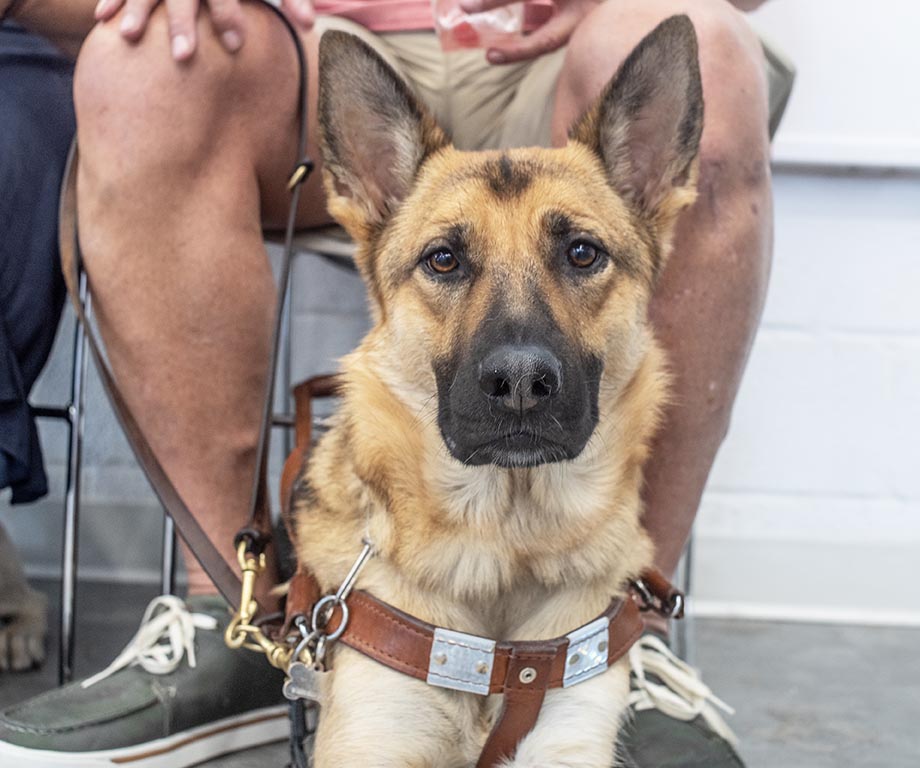
“Believe me it’s complete trust,” Moran said. “Together we are a team. I am putting my trust in a dog that is also trusting me to follow her cues to keep me safe. Occasionally I just get this overwhelming feeling that this relationship is magic. I’m blind walking a mile from my house and I haven’t been injured. I’m listening to the birds and smelling the air and it’s beautiful.”
Sean McDonald, a Guide Dog Mobility Instructor for The Seeing Eye, has been a puppy raiser and a trainer for the organization for the past 5 years. He said many hours and a great deal of effort goes into the process of matching a blind person with a guide dog. Love at first sight, however, happens in an instant.
“Love at first sight when a guide dog meets their owner is absolutely a thing,” McDonald said. “It is so, so special when you see it.”
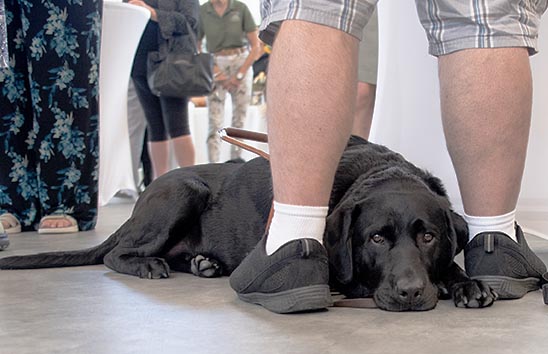
Walking a Mile with a Guide Dog Begins with the First Step
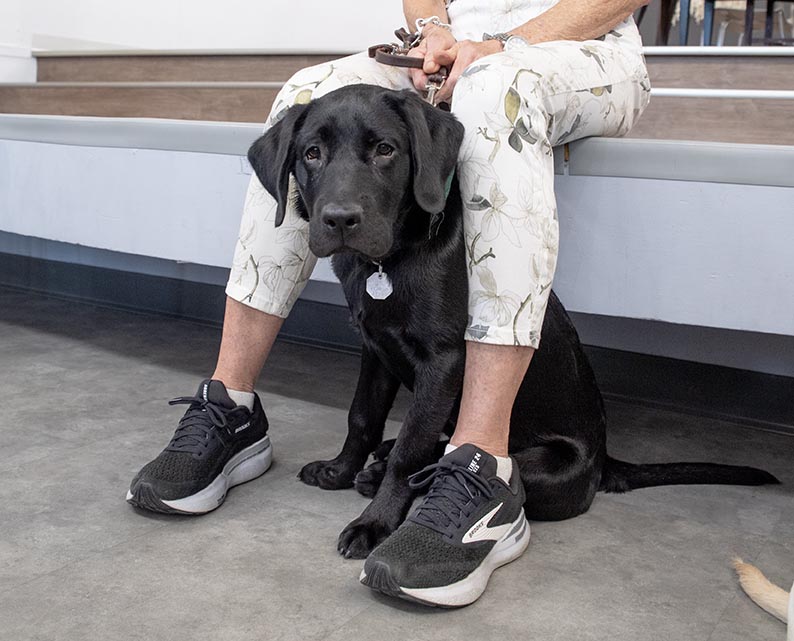
Before dogs can begin formal training to guide blind people, they get their start as puppies living in the homes of dedicated volunteers known as puppy raisers. Puppies live with raisers and their families until they are 13 to 16 months old.
Raisers teach the puppies house manners, basic obedience, and how to socialize with other people and pets. They also expose the pups to a variety of social situations and experiences that range from shopping and car trips to visiting airports and boarding airplanes.
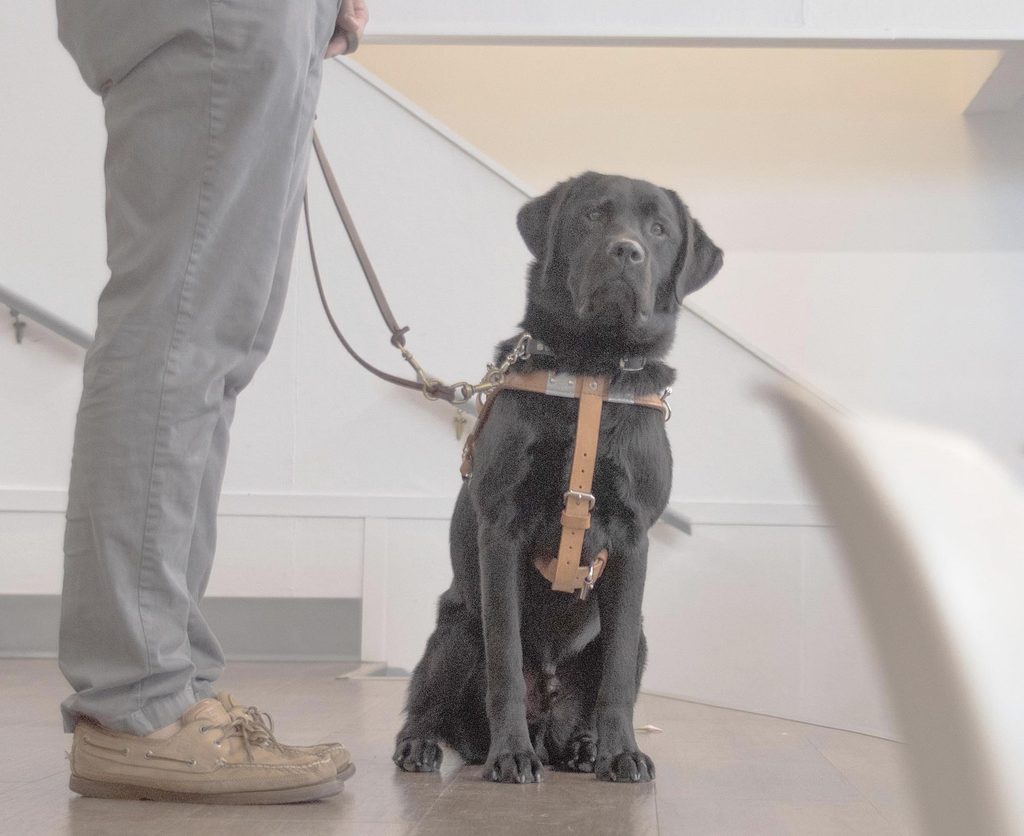
Beth Pfizenmayer, who is currently raising her 16th puppy, a cream lab named Austin said puppy raising is a crucial first step on the journey a dog takes in order to become a future Seeing Eye dog.
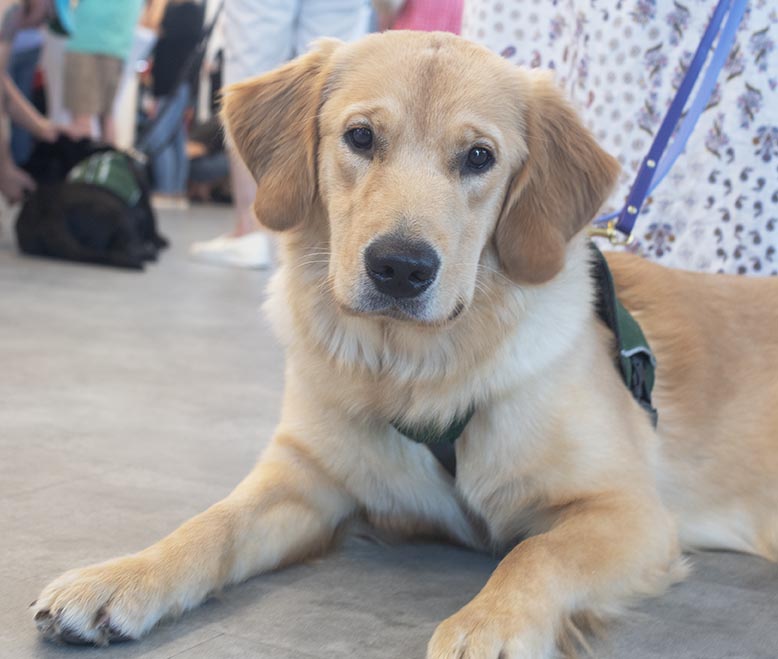
“This dog is with me 99% of the time wherever I go,” she said. “He goes to church with me, and on every errand I run. The biggest job a puppy raiser can do is expose these dogs to as much as we can. We try to make it as easy as possible for the trainers and the blind person to be able to work with the dog.”
“Together we are a team. I am putting my trust in a dog that is also trusting me to follow her cues to keep me safe. Occasionally I just get this overwhelming feeling that this relationship is magic. I’m blind walking a mile from my house and I haven’t been injured. I’m listening to the birds and smelling the air and it’s beautiful.”
-Michael Moran
Peggy Grow, a volunteer and Trustee for The Seeing Eye, has been raising puppies to become guide dogs for 23 years. “I have made some of my best friends through the puppy raising program,” she said. “I would tell anyone interested in becoming a puppy raiser to embrace the experience, get ready to enjoy it, and have fun.”
Puppy Love is Forever
It’s only natural for volunteer puppy raisers to develop a deep attachment to their puppies. Sometimes this can be a challenge for the raiser when it comes time to say goodbye and return the pup to The Seeing Eye campus for more advanced training. Separation anxiety is a real thing.
“As a puppy raiser it’s a bittersweet experience,” McDonald said. “It’s hard for any raiser to give up the dog as you can imagine. It’s hard for me because I know my dog so well, but when I hand him over, I must act like I don’t know him anymore which is hard.”
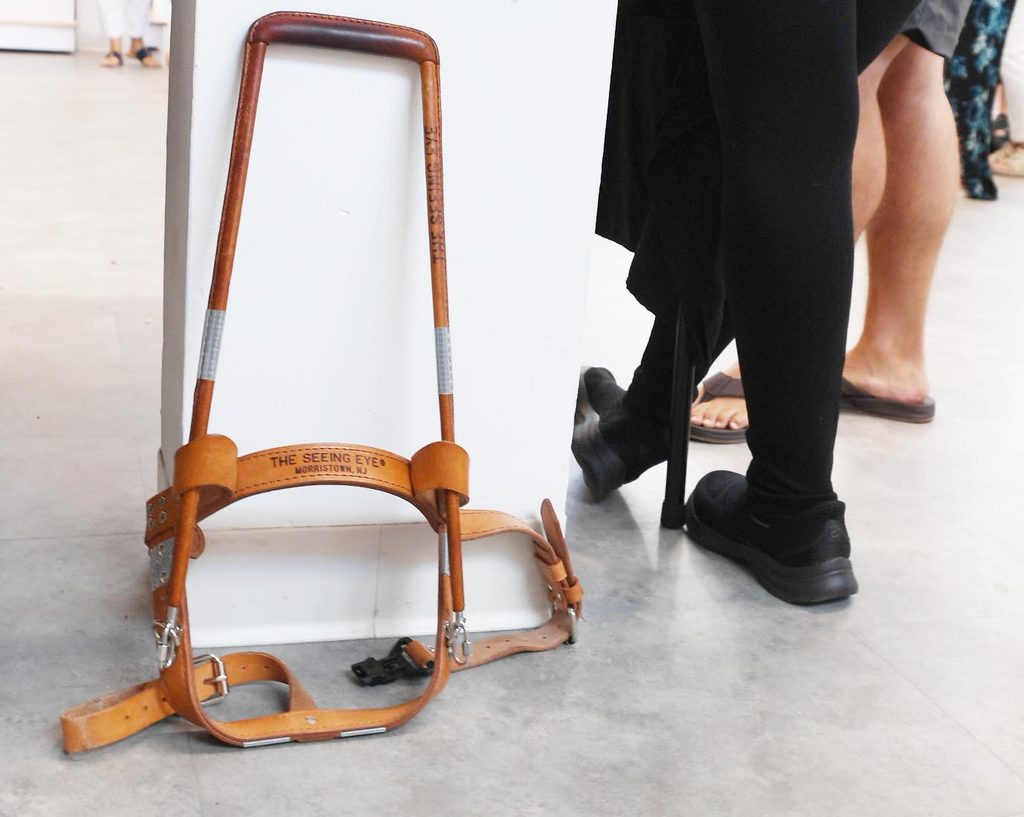
Once a puppy has been returned to The Seeing Eye campus and completed four months of advanced training, he or she is given an official harness to wear and taken on a walk around town with its trainer. The walk is considered a sort of graduation ceremony for the dog.
The puppy raiser is allowed to attend the graduation, from a distance, so as not to distract the dog. But if the wind is blowing in the right direction the dog will catch the scent of the person who raised them.
“It’s very touching,” Pfizenmayer said. “Sometimes I can see my dog raise their head, sniff the air, look over their shoulder and I know that they are looking for me. But only for a moment because they’ve been trained to know that when they are in their harness they are working and can’t be distracted. It makes me feel a little sad but at the same time very proud at how well they have turned out.”
Volunteers understand that giving back a puppy they have devoted a year’s worth of patience, love and devotion to may be hard. They also understand they are giving a blind person a chance to lead a previously unimaginable, independent life.
“People want to know what it’s like to have a guide dog,” Moran said. “If you airlifted me into any city in the world with my dog, I know I will be safe. I’m not going to fall or bump into anything or get hit by a car. She’s been trained to disobey my commands too. If I were to tell her to go but there is a car in front of us, she is not going to go.”
Still, it isn’t always easy to say goodbye.
In two weeks, McDonald will be giving his black lab Champion back to The Seeing Eye when a new class of students arrive ready and eager to be matched with a dog. McDonald said these days, when he looks at his canine friend, he hears a clock ticking.
“I knew it was inevitable,” McDonald said. “Sure, it’s going to be hard. You spend a year or more with your dog and you get to see them grow up. But giving them up is the ultimate reward.”
Since 1929 The Seeing Eye organization has been breeding, raising, training and matching guide dogs with people who are blind or visually impaired.
The Seeing Eye is entirely dependent on private donations to do their work throughout the United States, Canada and Puerto Rico. The current cost to raise one Seeing Eye dog is about $78,000. For more information about The Seeing Eye and all the ways you can help by raising a puppy, fundraising or donating please visit their website.
Images: Marjorie Amon
For more pictures of the Seeing Eye Puppies at the Long Beach Island Arts and Science Foundation go here
Contact Information
The Seeing Eye
P.O. Box 375
Morristown, NJ
07963-0375
973-539-4425
in***@*******ye.org
Instagram: @theseeingeye