
Come Hell and High Water
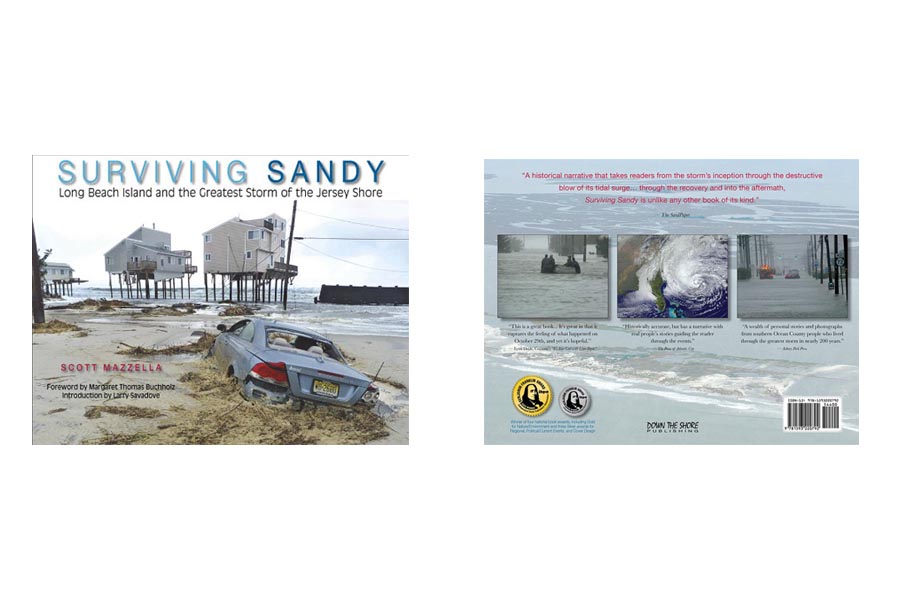
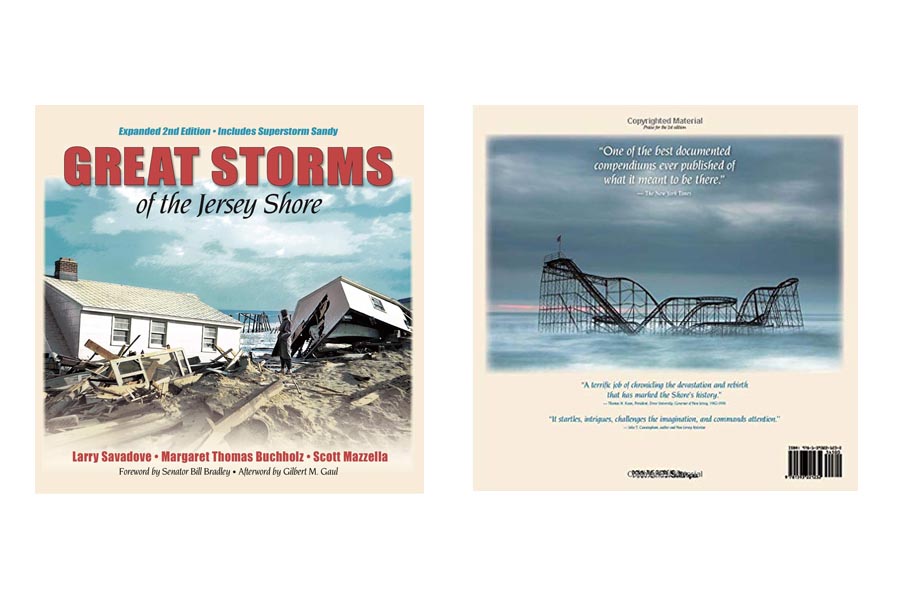
As if smoke haze, hail, and high heat weren’t enough, the possibility of another great storm barreling up the New Jersey coastline is always on the horizon. Great Storms of the Jersey Shore by Margaret Thomas Buchholz, Larry Savadove, and Scott Mazzella and Surviving Sandy: Long Beach Island and the Greatest Storm of the Jersey Shore by Scott Mazzella focus on the history behind NJ storms from 1944 to 2016 and the disaster that had to be seen to be believed.
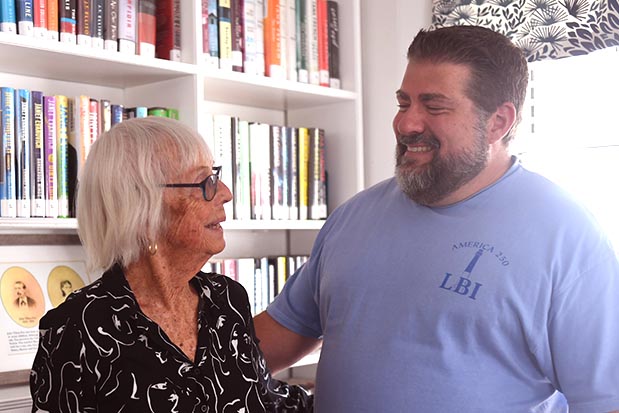
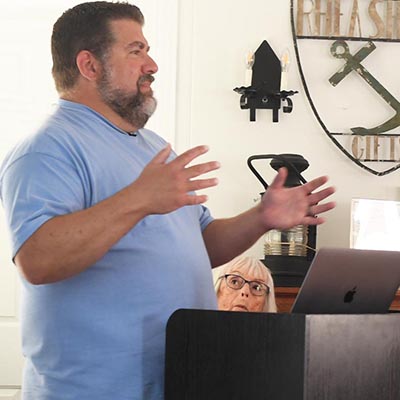
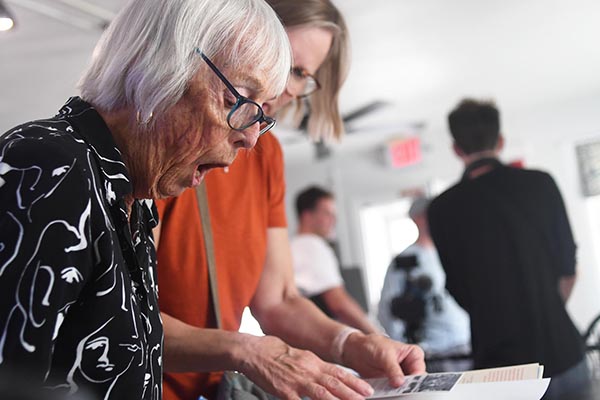
After a recent lecture and book signing conducted at the Beach Haven Public Library in Beach Haven, NJ, Buchholz and Mazzella sat down with Coastal Living LBI to discuss their own observations, lessons and experiences that came along with writing about the great storms of the Jersey shore.
Humans or Mother Nature? Who do you feel got hit hardest by the storms?
Buchholz: It’s the people I think who took the biggest hit because it was all so personal and they really felt it.
Mazzella: The impact is always going to be on people and what we put in front of Mother Nature. Our houses, our businesses, infrastructure, intangible things like our memories. Mother Nature can usually absorb and fix what is wrong with herself on her own. The Holgate, NJ bird sanctuary for example. After Sandy it was overcome with sand. Today it is growing and vibrant.
What got you started thinking that a book on the great storms of the New Jersey shore would be a good idea?
Buchholz: When I was publishing the Beachcomber newspaper in Surf City, NJ back in the late ‘70s an old woman came in who had been collecting clippings from newspapers up and down the coast about various storms from back in the 1920s. They were pasted into a little album. I held onto it and I showed it to the late Larry Savadove, a writer at the time for The SandPaper in Surf City, NJ and said what about making this into a book? He said let’s go and so we asked Curt Travers, editor of The SandPaper and he said let’s go and so we did. We were the first to do a book like this.
Mazzella: Walking around looking at all the devastation after Sandy and what was happening, I just realized it had to be documented. As a journalist I was just trying to get people into the experience.
Were there any challenges you had to deal with when you started research for your books?
Buchholz: I contacted so many people, mostly in person, but I don’t remember anybody who resisted talking to me. I drove up the coast visiting all the historical societies, libraries, etc. Most people just wanted to talk about what happened to get it off their chest. They were happy there was a book coming up about it.
Mazzella: Well, I was teaching up north and at the time I had a three-year-old and a newborn when I was writing so that was hard. My wife picked up most of the slack. But talking to people for the book was easy. There were so many threads to pull and once you picked one it led you to another person and that person led you to someone else to talk to. Of course, some didn’t want to talk. They were afraid they would get too emotional. Some people cried on the phone when I was interviewing them.
Pick one or two storm stories that stick in your mind.
Buchholz: A story I remember was one I got after the book had come out. It was about a man and wife and a child in a car in Surf City and they were trying to get off the island. They waited too late. The car was washed over toward the bay. Some how they got out and wrapped up the child and pulled themselves to someone’s house by grabbing onto the bushes.
Mazzella: Charlie Potter. He went over to the Seashell Resort and Beach Club in Beach Haven, NJ from the Engleside Inn also in Beach Haven, NJ to check on things. He was downstairs in the bar area when the water blasted in through the windows trapping him under a beer cooler. It was like a movie Hollywood could write about! Then there was one about a guy playing the bagpipes on the dunes during the storm. He said something about wanting to blow Sandy away.
There are some experiences that teach us what we can and cannot do. Would weather disasters like storms be one of them?
Buchholz: Yes. Storms teach you to be cautious and to be very aware when you get a storm report.
Mazzella: Yes. We learn we have resiliency and we can bounce back. One of our earlier tag lines for the book was “the story of resilience.”
Are there any lessons storms have taught you personally?
Buchholz: What storms have taught me because I have experienced so many of them as a child and as an adult is again, be cautious and pay attention to news reports. Attempt to do the right thing and not stick around when you’re told it’s time to leave the island.
Mazzella: The weather always wins. You need to respect the weather and authorities and weather forecasters. Heed the warnings. Not doing so could be the last thing you do.
Do great storms and the destruction they cause amplify the difference between those who have money and those who have less?
Buchholz: Yes. I think it has to do with people who can afford storm insurance. Some people can’t because they have small houses or no mortgages and they must make the choice as to whether something is going to happen or not.
Mazzella: Storms have probably always illustrated that. Sandy really made this true.
How does the massive October 2012 Superstorm Sandy stack up against the rest of the great storms you’ve presented in your books?
Buchholz: I wasn’t here on the island when it happened. But the water came up from the west and entered my house on the bay. It hadn’t happened before and my house was built in 1934.
Mazzella: I put Sandy in the same category of the 1944 Great Atlantic Hurricane and the Ash Wednesday Storm of 1962. It’s one of the biggies.
When it comes to a great storm on the Jersey shore, do you think people become complacent once the sand settles and the worst is over?
Buchholz: Some do. Some don’t. It depends whether they were here and saw the horror firsthand. If you have faced destruction of your home, you are never complacent and you are very aware of the next storm.
Mazzella: Some might. Everybody is different. Just the threat of thunderstorms today can make people anxious enough to pay attention to the warnings.
What words of caution would you share with us when it comes to deciding whether to evacuate or stay put in a major storm.
Buchholz: Well, if they say it’s time to evacuate, you evacuate. Believing a storm couldn’t happen or that you can handle it is stupid. You are asking for trouble and putting other people’s lives in danger if you don’t leave.
Mazzella: Every time someone decides to stay is always surprising to me. I’ve never stayed put. I always err on the side of caution. I’m not sticking around.
Would you offer any advice to our local officials on Long Beach Island, NJ the next time a big storm hits?
Buchholz: I wouldn’t dare.
Mazzella: Support your local first responders as much as you can and give them the tools that they need. Officers and EMTs are putting their lives on the line.
In the end, the unfortunate likelihood is that history will repeat itself when it comes to great storms on the Jersey shore. What should we know about the next big one?
Buchholz: Appreciate the power of nature at its worst form.
Mazzella: There will always be future storms and there is nothing we can do about it. We need to be as best prepared for it as possible but sooner or later there is going to be one we can’t recover from.
Great Storms of the Jersey Shore by Margaret Thomas Buchholz and Larry Savadove and Scott Mazzella and Surviving Sandy: Long Beach Island and the Greatest Storm of the Jersey Shore by Scott Mazzella are available at Down the Shore Publishing, Barnes and Noble, Amazon and many other fine local retailers
Images: Marjorie Amon
Contact Information
Margaret Thomas Buchholz
Email: po***@***il.com
Scott Mazzella
Email: gr**********@***il.com
Instagram: @great_storms_nj
Tik Tok: great_storms_nj
Down the Shore Publishing